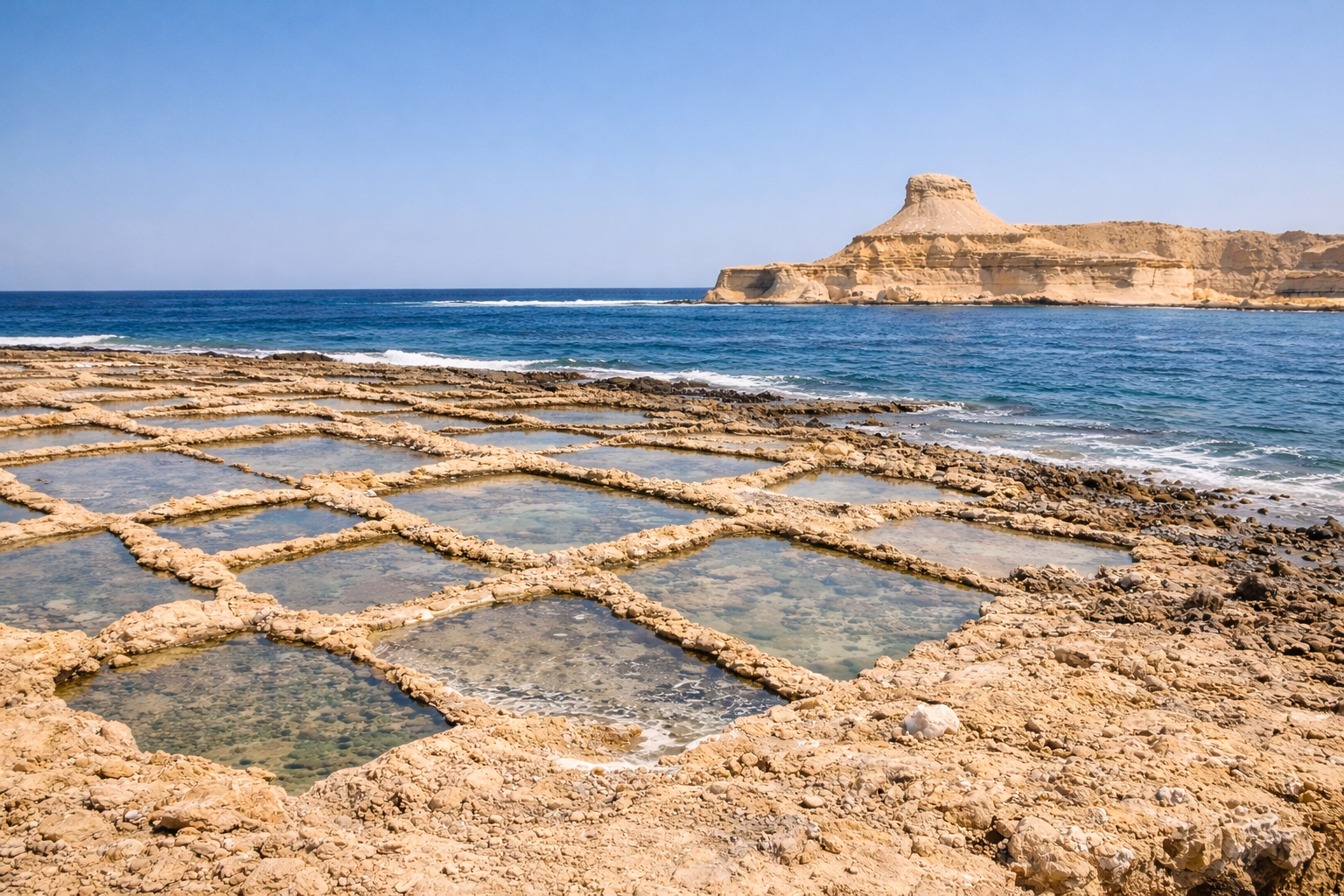
Along Gozo’s northern shoreline, geometry meets horizon. At first glance, the salt pans near Marsalforn look almost abstract — grids etched into limestone, repeating toward the open Mediterranean. Yet they are not relics of another era. They remain a working coastline.
At Xwejni Bay, just beyond Marsalforn, centuries-old salt pans stretch in quiet formation along the rock. Carved directly into the limestone, these shallow basins fill naturally with seawater. There is no machinery. No intervention beyond tradition. Sun, wind, and time do the work.
Visiting the Gozo salt pans feels different from visiting a monument. There are no gates, no ticket booths, no curated explanations. You simply walk beside them. Light shifts across the stone. Water reflects the sky. Salt slowly gathers, as it has for generations.
Where the Salt Pans Are Located
The most iconic stretch og the Gozo salt pans lies between Marsalforn and Żebbuġ at Xwejni Bay. Often referred to as the Xwejni salt pans or Marsalforn salt pans, they form a long, patterned ribbon along the coastline of Gozo facing open sea.
Access to the Xweijni salt pans in Gozo is simple. A coastal road runs beside them, with informal parking available. From Marsalforn, the walk north is especially atmospheric in the late afternoon, when the light softens and the sea grows quieter.
How Salt Is Harvested in Gozo
The method has changed little over time. Seawater flows into the pans. Under the Mediterranean sun, evaporation begins. What remains are crystalline patterns forming slowly across the stone.
In summer, local families still harvest the salt by hand. You may notice small seaside rooms carved into the rock — modest spaces where freshly collected Gozo sea salt is stored and sold. The process is unhurried, seasonal, and deeply tied to weather.
When to Visit
Late afternoon brings softer light and long shadows across the grids.
Summer reveals the Xwejni salt pans in active use.
Early evening invites a quiet coastal walk toward sunset.
After dark, the coastline becomes still — ideal for pairing your visit with one of Gozo’s renowned stargazing spots, far from urban glare.
When shallow water rests inside the pans, reflections intensify the scene. After winter storms, however, parts of the coastline can appear rough or partially submerged — a reminder that this is a working shore, shaped by the sea.
A Landscape That Still Works
The Xwejni salt pans are not decorative installations. They are functional, living heritage. Walking inside the basins can damage delicate salt formations and disrupt harvesting cycles.
Remaining on the rock edges allows this centuries-old practice to continue — quietly, steadily — much like other enduring island traditions, from village festas to family gatherings woven through the year.
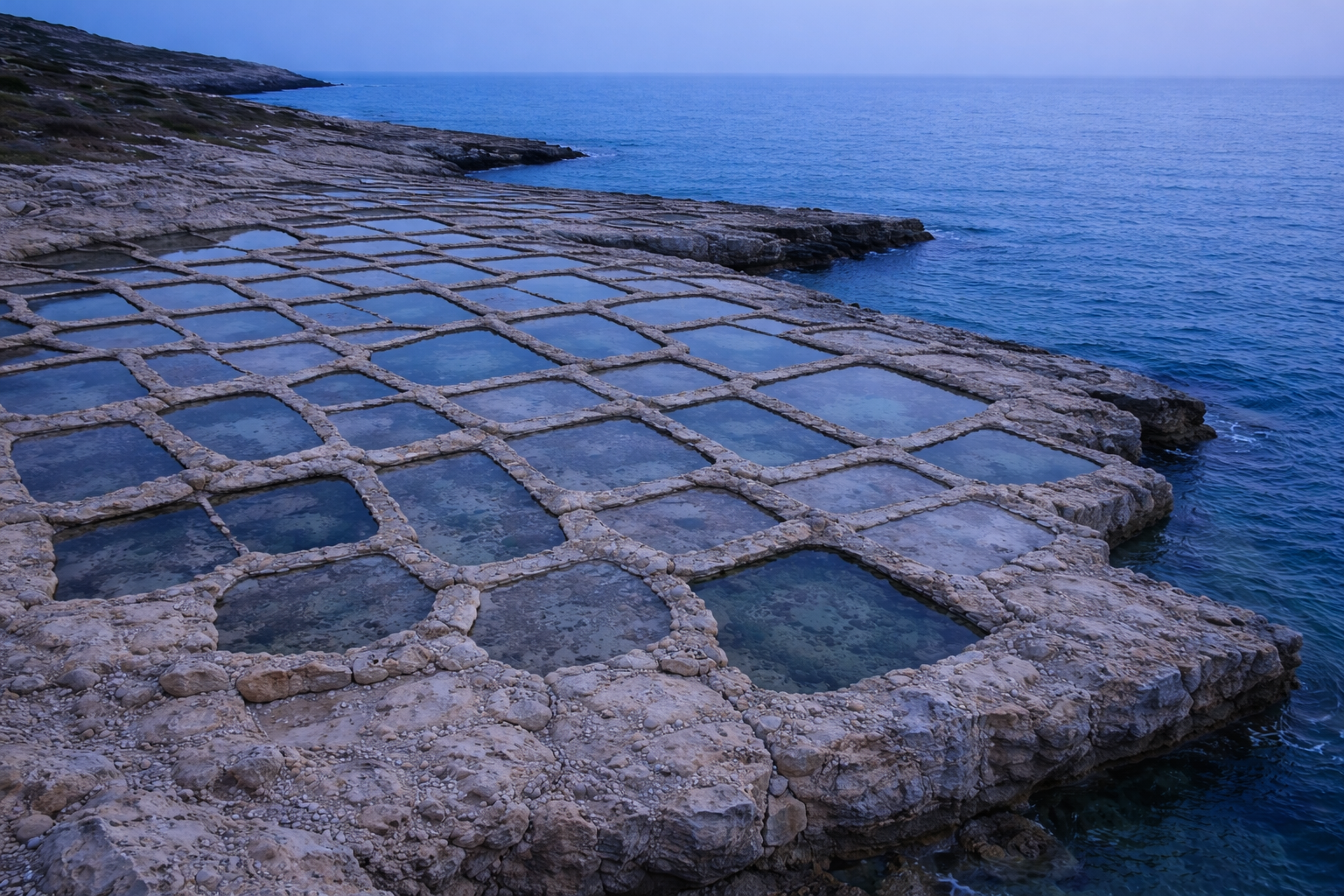
Gozo Saltworks – The Atmosphere
The mood here is geometric yet organic. Structured yet elemental.
Sea, stone, and patience in dialogue.
The Malta salt pans in Gozo do not demand attention. They reward stillness. And if you pause long enough, you begin to sense their rhythm — measured not in minutes, but in seasons.
What to know before visiting the Gozo Salt Pans
What are the Gozo salt pans?
The Gozo salt pans are centuries-old limestone basins carved into the coastal rock at Xwejni Bay. They collect seawater naturally, allowing sun and wind to evaporate it until sea salt crystals form. Many of them are still in use today.
Where are the salt pans in Gozo located?
The most famous salt pans are found at Xwejni Bay on Gozo’s northern coast, between Marsalforn and Żebbuġ. They stretch along the shoreline in a long geometric formation facing the open Mediterranean Sea.
Are the Gozo salt pans still active?
Yes. During the summer months, local families continue to harvest salt by hand using traditional methods. The Gozo saltwork process depends entirely on weather conditions and natural evaporation.
Is there an entrance fee to visit the salt pans?
No. The saltwork area in Gozo, Malta is open and freely accessible. There are no gates or ticket offices, as the Gozo salt pans form part of the natural coastline.