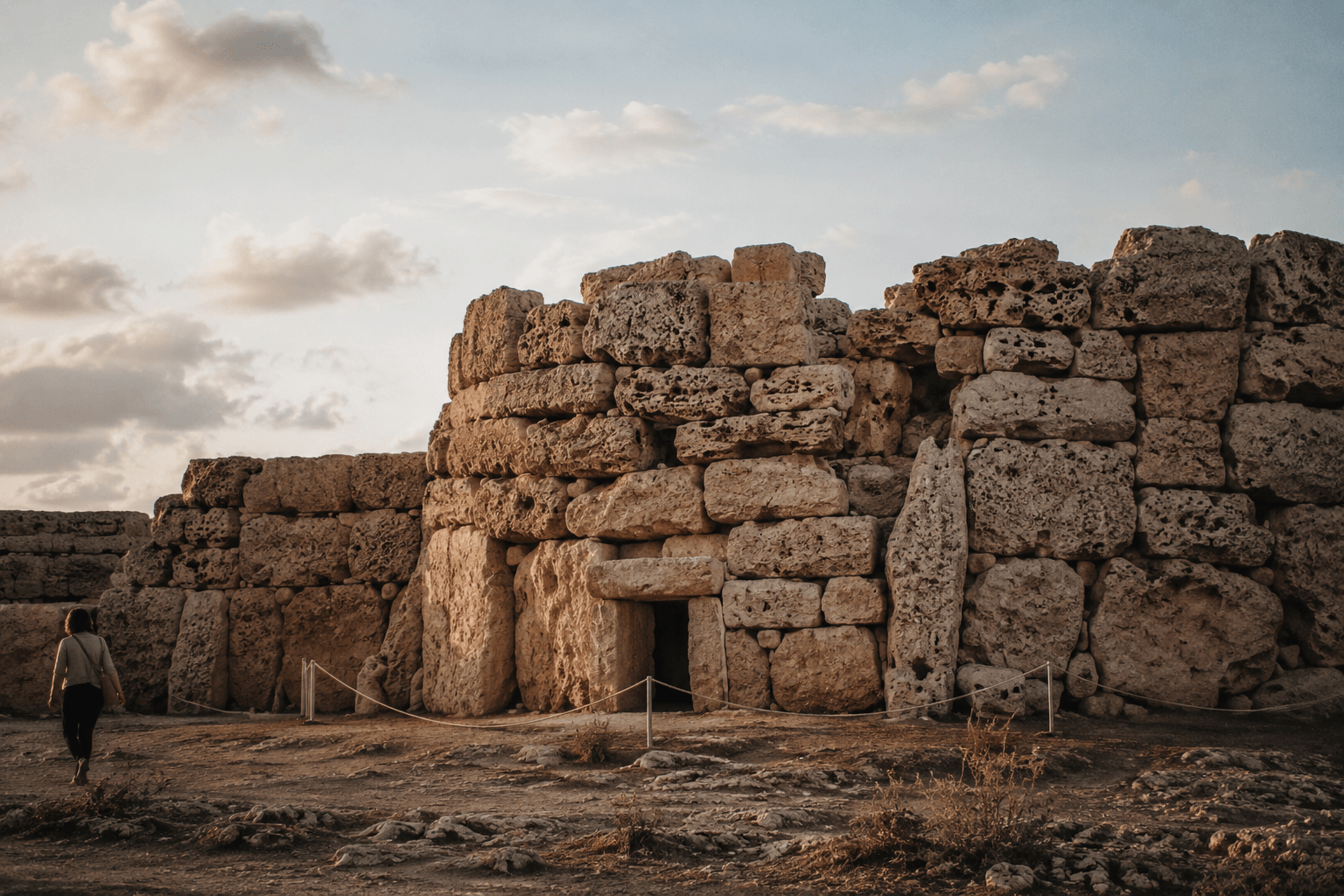
One of the world’s oldest freestanding stone monuments
The Ggantija Temples in Xagħra, Gozo are UNESCO-listed Neolithic temples built between 3600 and 3200 BCE. They are considered among the oldest freestanding stone structures in the world, older than both Stonehenge and the Egyptian pyramids.
Quick Facts
- Location: Xagħra, Gozo, Malta
- Built: c. 3600–3200 BCE
- UNESCO Status: Megalithic Temples of Malta
- Visit Duration: 60–90 minutes
- Temple Type: Neolithic ceremonial complex
- Best Time to Visit: Morning or late afternoon
On a plateau above Xagħra on the island of Gozo, the Ġgantija Temples rise from the limestone landscape with quiet permanence. The stones feel elemental. Weathered, curved, and immense.
More than 5,500 years ago, these temples were shaped by a Neolithic farming society that understood engineering, ritual movement, and landscape orientation long before written history reached the Mediterranean.
Today, Ġgantija remains one of the most important archaeological sites in Malta and one of the defining historic landmarks of Gozo.
TL;DR
- The Ggantija Temples are over 5,500 years old
- The site predates Stonehenge and the Egyptian pyramids
- Located in Xagħra, Gozo
- UNESCO World Heritage Site
- Allow around 60–90 minutes to visit
- Best visited in soft morning or late afternoon light
The Ġgantija Temples in Gozo are among the oldest freestanding stone monuments in the world and preserve one of Europe’s earliest known ritual temple complexes.
What Are the Ggantija Temples?
The Ġgantija Temples are a prehistoric temple complex located near the village of Xagħra on the island of Gozo in Malta.
The complex consists of two interconnected Neolithic temples surrounded by a single outer boundary wall. Archaeologists believe the temples were used for ritual and ceremonial activities connected to agricultural cycles and fertility practices.
The name Ġgantija comes from the Maltese word ġgant, meaning giant. Local folklore once claimed that a giantess built the temples because the stones appeared too massive for ordinary humans to move.
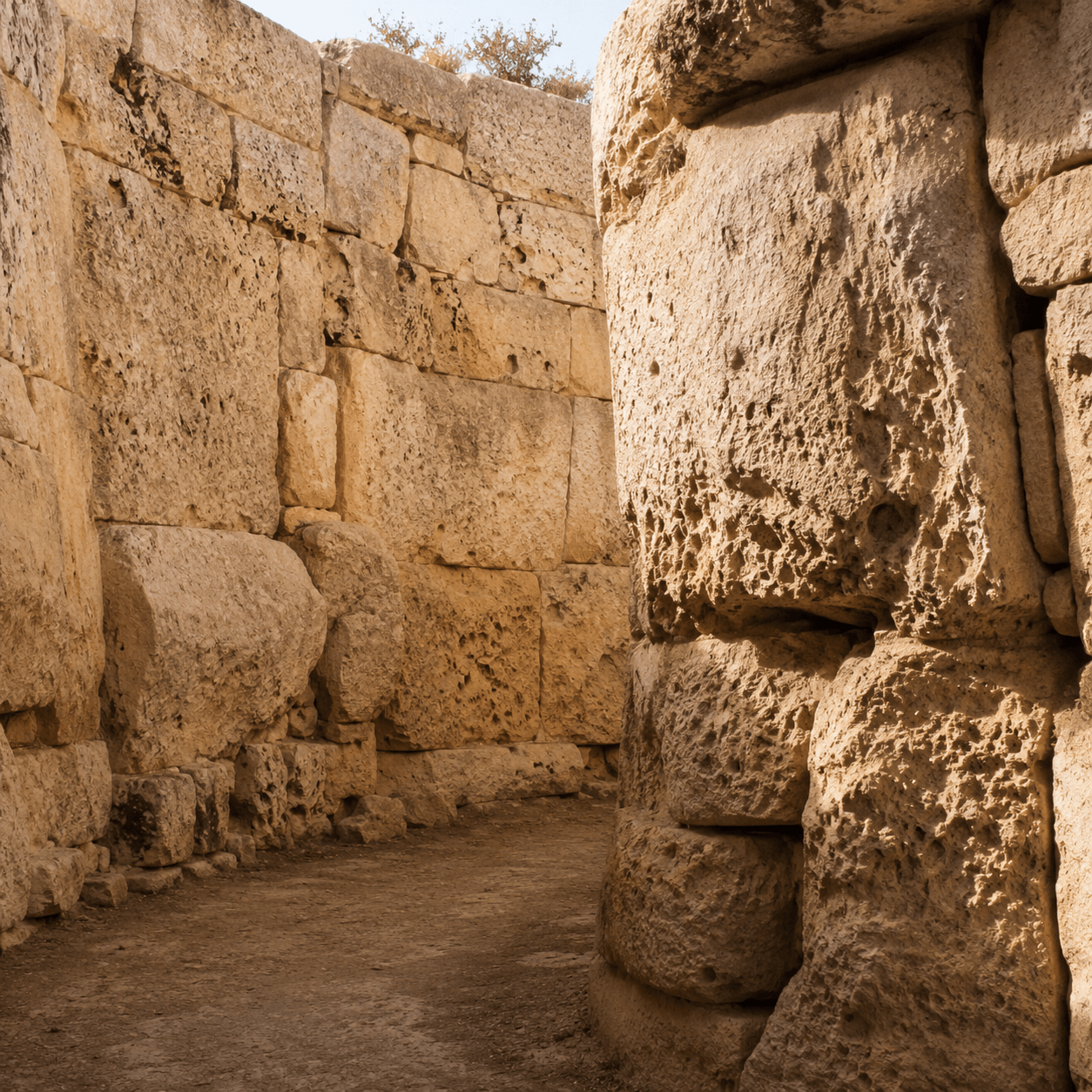
Archaeological evidence instead points to an organised Neolithic society capable of transporting and positioning limestone blocks weighing more than 20 tonnes.
Why the Ggantija Temples Matter
The Ggantija Temples are important because they represent some of the earliest large-scale freestanding architecture ever constructed by humans.
Unlike caves adapted for shelter, Ġgantija was intentionally designed as monumental architecture in open landscape.
The temples were built centuries before:
- Stonehenge
- the Egyptian pyramids
- classical Greek civilisation
- Roman Malta
This makes the site exceptionally important within European prehistory.
Today, the Ggantija temples form part of the UNESCO-listed Megalithic Temples of Malta, a collection of prehistoric temple sites across the Maltese Islands.
While many travellers first associate Gozo with coastal scenery such as Dwejra Bay or Ramla Bay, Ġgantija reveals a much older layer of the island’s identity.
Architecture and Layout
The Ggantija Temple Structure
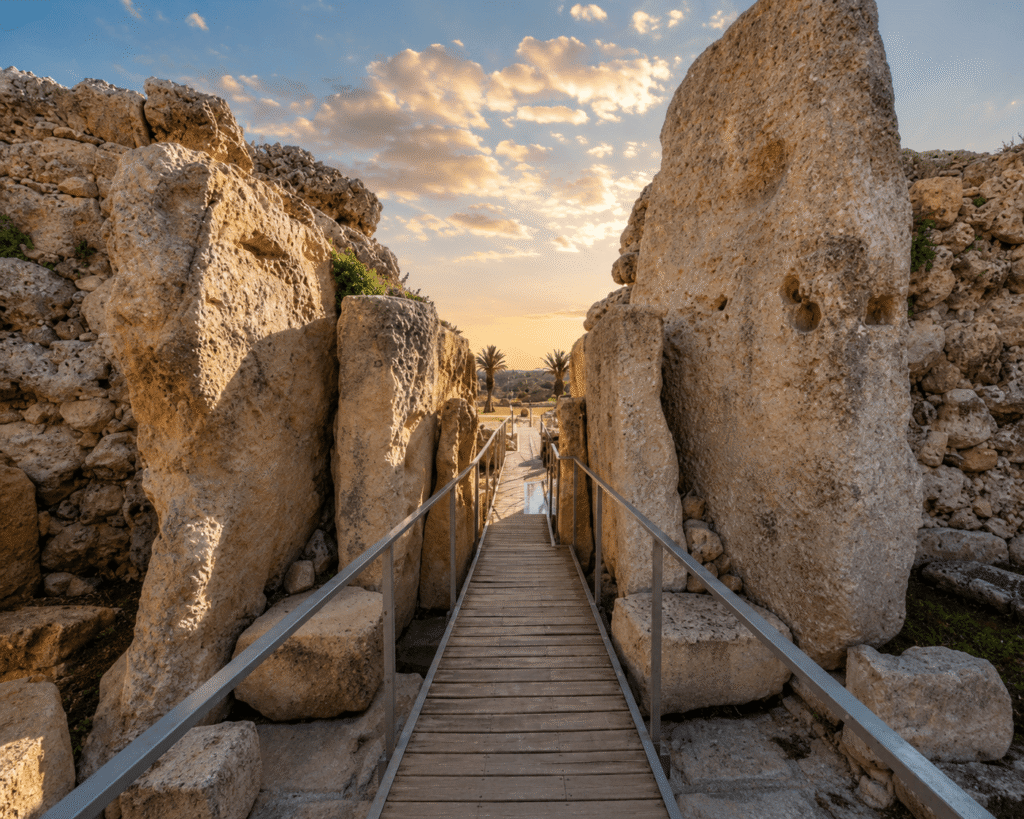
The Ġgantija complex follows a cloverleaf-style plan centred around a main corridor leading into rounded chambers called apses.
This design created controlled movement through the structure and likely shaped ceremonial activity.
Inside the temples, the spaces narrow and widen rhythmically. The effect feels deliberate and surprisingly modern in spatial awareness.
The outer walls are constructed from large globigerina limestone blocks, while smaller stones shape interior divisions, thresholds, and altar-like features.
Some individual stones exceed 20 tonnes.
Orientation and Landscape
The Ggantija temples stand slightly elevated above the surrounding countryside near Xagħra.
From the plateau, the landscape opens toward northern Gozo and the coastline beyond Ramla Bay.
Researchers have explored possible alignments with seasonal sunlight cycles, though interpretations remain cautious.
What remains clear is the builders’ awareness of:
- light
- movement
- orientation
- surrounding landscape
Unlike naturally formed sites such as Tal-Mixta Cave or the salt pans of Xwejni, Ggantija reflects intentional human design.
Visiting the Ġgantija Temples in Gozo
What to Expect
Modern visitors enter through a contemporary visitor centre before walking toward the open-air archaeological complex.
The experience unfolds gradually:
- Historical introduction
- Museum displays
- Exterior temple approach
- Interior ceremonial chambers
Most visitors spend around 60 to 90 minutes at the site.
Best Time to Visit
Morning visits are typically quieter and cooler.
Late afternoon brings softer Mediterranean light across the limestone surfaces, creating warmer textures and calmer atmosphere for photography.
Summer midday heat can feel intense due to the exposed plateau setting.
Nearby Places to Combine With Ġgantija
Many travellers combine Ġgantija with:
- Ramla Bay
- Victoria (Rabat), Gozo’s capital
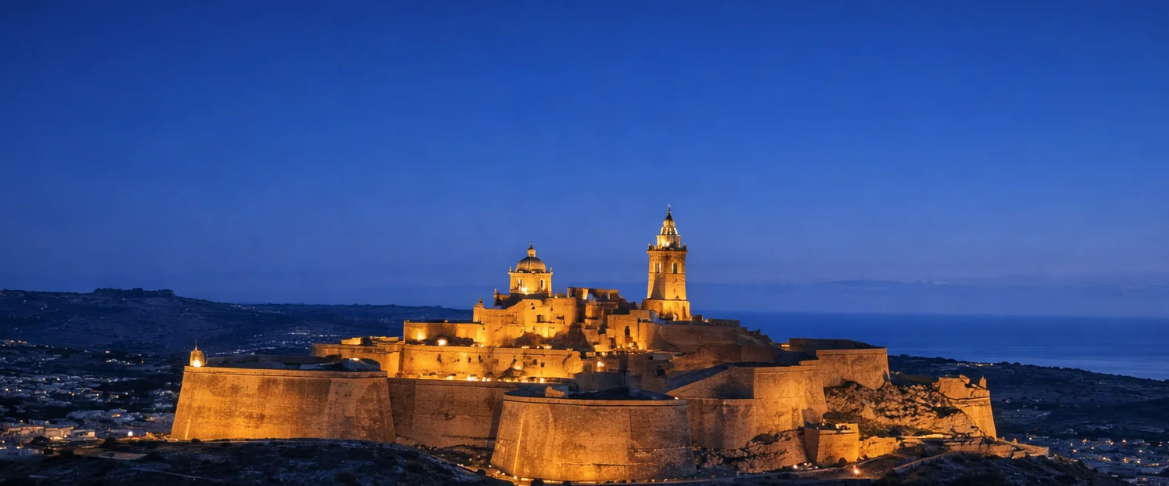
- The Citadel in Gozo
- Xagħra village cafés
- coastal viewpoints near Marsalforn
For broader trip planning, the site also fits naturally into a complete Gozo travel guide or a slower cultural itinerary around the island of Gozo.
Is Ġgantija a Good Place to Visit in Gozo?
Yes. The Ġgantija Temples are one of the most historically significant places to visit in Gozo and Malta.
The experience differs from dramatic coastal attractions or swimming spots. The atmosphere here is quieter and more reflective.
There are no surviving inscriptions explaining what once happened within the chambers. No carved narrative survives.
Only structure.
Stone.
Scale.
And endurance.
This restraint gives the site unusual emotional weight.
Where diving in Gozo or stargazing in Gozo reveal the island’s natural drama, Ġgantija anchors something older and more permanent.
It reminds visitors that Gozo’s story began long before fortifications, fishing villages, and ferry crossings.
Seasonal Atmosphere
Spring
Spring brings green countryside around Xagħra and softer temperatures for walking.
Summer
Summer light intensifies the pale limestone colours, though midday temperatures can become harsh.
Autumn
Autumn offers calmer conditions and warm evening light across the plateau.
Winter
In winter Gozo visits feel quieter and more contemplative, especially outside holiday periods.
Practical Tips for Visiting the temples of Ggantija
- Visit early or late for softer light
- Wear comfortable walking shoes
- Bring water in summer
- Allow time for the visitor centre
- Combine the visit with Xagħra village
- Photography is best during golden hour
Written from local observation. Traditions and archaeological interpretations may vary slightly as ongoing research develops.
The Atmosphere of Ggantija
The Ggantija Temples do not overwhelm with spectacle.
Instead, they steady the landscape.
The stone absorbs wind, silence, and time itself. The surrounding countryside remains open and understated.
This calmness is part of what makes the site memorable.
Even after thousands of years, the temples still hold form beneath the Mediterranean sky.
Frequently Asked Questions
How old are the Ġgantija Temples in Gozo?
The Ġgantija Temples in Gozo were built between approximately 3600 and 3200 BCE during Malta’s Neolithic Temple Period. Archaeologists consider the site one of the oldest freestanding stone monuments in the world. The temples are significantly older than both Stonehenge and the Egyptian pyramids and form part of the UNESCO-listed Megalithic Temples of Malta.
Where are the Ġgantija Temples located?
The Ġgantija Temples are located near the village of Xagħra on the island of Gozo in Malta. The archaeological site stands on an elevated plateau overlooking parts of northern Gozo and sits relatively close to Ramla Bay. Visitors can reach the temples easily by car, local bus, or organised island tours from Malta.
Why are the Ġgantija Temples important?
The Ġgantija Temples are important because they preserve one of Europe’s earliest known examples of monumental ritual architecture. The site demonstrates that Neolithic societies in Malta had advanced knowledge of engineering, planning, and ceremonial space thousands of years before written history developed in the region. The temples also hold UNESCO World Heritage status.
How long should you spend at Ġgantija in Gozo?
Most visitors spend between 60 and 90 minutes exploring the Ġgantija Temples in Gozo. This usually includes time inside the visitor centre as well as walking through the temple complex itself. Travellers interested in archaeology, photography, or prehistoric history may prefer a longer and slower visit, especially during quieter morning hours.