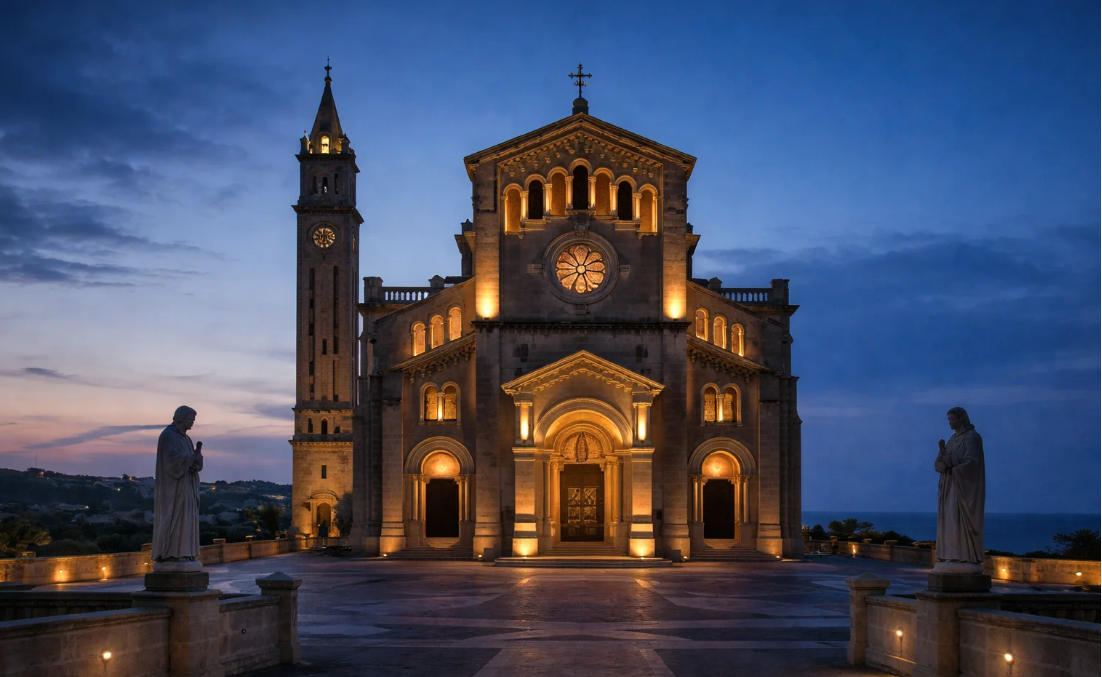
In the quiet countryside near Għarb, Ta’ Pinu Basilica rises from open fields rather than from a town square. There are no narrow streets enclosing it. No dense façades pressing in. Instead, the church stands against wide sky — visible from afar across western Gozo.
For many visitors, Ta Pinu Basilica in Gozo is more than architecture. It is one of Malta’s most important pilgrimage sites and a defining part of Gozo’s religious identity. Even without devotional intent, the setting alone leaves a lasting impression: limestone, horizon, stillness.
Ta Pinu Mass Times and Visitor Information
Ta Pinu Church is not only one of Gozo’s most important landmarks but also an active pilgrimage church. Mass is celebrated daily, and visitors are welcome to attend services or quietly explore the basilica outside of worship times.
The schedule varies slightly between weekdays and Sundays or public holidays in Gozo.
Ta Pinu Mass Schedule
| Day | Ta Pinu Mass Schedule |
|---|---|
| Monday – Saturday | 07:30 • 08:30 • 18:30 |
| Sundays & Public Holidays | 06:15 • 08:30 • 10:00 • 11:15 • 17:00 |
Daily Devotions
- Holy Rosary: 18:00 every day
- Visitors are welcome to join or simply observe respectfully
Practical Visitor Information
- Location: Ta’ Pinu Church, near the village of Gharb, on the western side of Gozo
- Typical visit duration: 30–60 minutes for the basilica itself
- Nearby pilgrimage route: The Stations of the Cross on Għammar Hill, overlooking the sanctuary
- Atmosphere: quiet countryside setting, away from the busier coastal areas
Many travellers combine a visit to the Ta Pinu church with a short walk in the surrounding countryside. The basilica stands in an open valley landscape, which adds to the calm and contemplative atmosphere often associated with this historic sanctuary.
Why Ta Pinu Is Important
Ta Pinu Basilica is a Roman Catholic Marian shrine dedicated to the Assumption of the Blessed Virgin Mary. The origins of the site trace back to a small rural chapel recorded in the 16th century.
In 1883, local woman Karmni Grima reported hearing a voice calling her to prayer inside the chapel. Soon after, stories of answered prayers and healings spread across the island. Pilgrims began arriving in growing numbers.
As devotion increased, construction of a larger church began in 1920. The present basilica was completed in 1932, built around the original chapel. In 1935, it was officially declared a Minor Basilica, confirming its national religious significance.
Today, Ta Pinu church remains one of the most visited churches in Gozo, particularly during Marian feast days and major religious celebrations.
Architecture and Landscape
The Ta Pinu Church in Gozo is built in neo-Romanesque style using warm Maltese limestone. Its tall bell tower and broad arched façade dominate the surrounding countryside, creating a strong visual landmark in western Gozo.
Inside, the space feels open but calm. High arches draw the eye toward the main altar. Behind it, the original chapel painting remains preserved. Side rooms display ex-voto offerings — letters, photographs and objects left by pilgrims in gratitude over many decades.
Opposite the Ta Pinu Basilica Gozo rises Ta’ Għammar Hill. Along the slope, marble statues represent the Stations of the Cross. Many visitors walk this path quietly. From the top, the view extends across farmland toward the sea.
What to Expect When Visiting Ta’ Pinu
- Location: Near Għarb, western Gozo
- Entry: Free admission
- Dress code: Modest clothing recommended
- Time needed: 30–60 minutes (longer if walking Ta’ Għammar Hill)
- Best time: Morning for quiet; late afternoon for softer light
Ta’ Pinu remains an active place of worship. Visitors are welcome, but silence and respect are expected inside the basilica.
Many travellers combine a visit to Ta’ Pinu with nearby highlights such as Dwejra Bay or Victoria and the Citadel, making it part of a wider exploration of Gozo.
The Atmosphere
Ta’ Pinu does not depend on spectacle. Its impact comes from openness and scale.
Unlike village churches framed by narrow streets, this shrine stands alone in the landscape. Wind moves freely across the plateau. The bell tower rises above fields rather than rooftops.
Whether you arrive for faith, architecture or cultural interest, Ta’ Pinu Basilica offers something steady and grounded — a place where devotion, history and landscape remain closely connected.
It is one of the clearest expressions of how deeply tradition is woven into Gozo’s identity.
References
New to Gozo?
Whether you’re visiting for a day or staying for a week, our complete island guide covers the best beaches, villages, scenic walks, cultural events and travel essentials to help you make the most of your time on Gozo.
Explore Gozo MaltaFAQs — Ta Pinu Basilica, Gozo
What is Ta Pinu Basilica known for?
Ta Pinu Basilica in Gozo is one of Malta’s most important Marian pilgrimage sites. It became widely known after reported miracles in 1883. Since then, it has developed into a national shrine and continues to attract both pilgrims and visitors.
Is Ta Pinu church worth visiting?
Yes, Ta Pinu Church in Gozo, Malta is worth visiting, even if you are not religious. The basilica stands out for its peaceful countryside setting, distinctive architecture, and cultural importance. In addition, the surrounding landscape adds to the overall experience.
Is there an entrance fee for Ta Pinu Basilica?
No, entry to Ta Pinu Basilica is free. However, visitors are expected to dress modestly and behave respectfully, as the basilica remains an active place of worship.
Where is Ta Pinu Basilica in Gozo located?
Ta Pinu Basilica is located near the village of Għarb in western Gozo, Malta. The site is surrounded by open countryside, which gives it a calm and isolated atmosphere.
How do you get to Ta’ Pinu Basilica in Gozo?
You can reach Ta Pinu Basilica by car, taxi, or bus. It is located near Għarb in western Gozo. Driving is the easiest option, while public buses connect the area with Victoria, although travel times may be longer.
How long should you spend at Ta Pinu?
Most visitors spend between 30 and 60 minutes inside Ta’ Pinu Basilica. However, you may want to allow extra time if you plan to explore the surrounding area, including the Stations of the Cross on Ta’ Għammar Hill.
When is the best time to visit Ta Pinu Basilica?
The best time to visit Ta Pinu Basilica is early morning or late afternoon. At these times, the site is usually quieter and the light over the surrounding countryside is softer. Midday can feel busier, especially during peak travel months or religious events.
What should you wear when visiting Ta’ Pinu Basilica?
Visitors should dress modestly when entering Ta Pinu Church. This usually means covering shoulders and knees. While rules may not always be strictly enforced, respectful clothing is expected because it is an active place of worship.
Can you take photos inside Ta Pinu Basilica?
Yes, photography is generally allowed inside Ta Pinu Basilica. However, visitors should avoid using flash and remain respectful, especially during services or quiet moments of prayer.