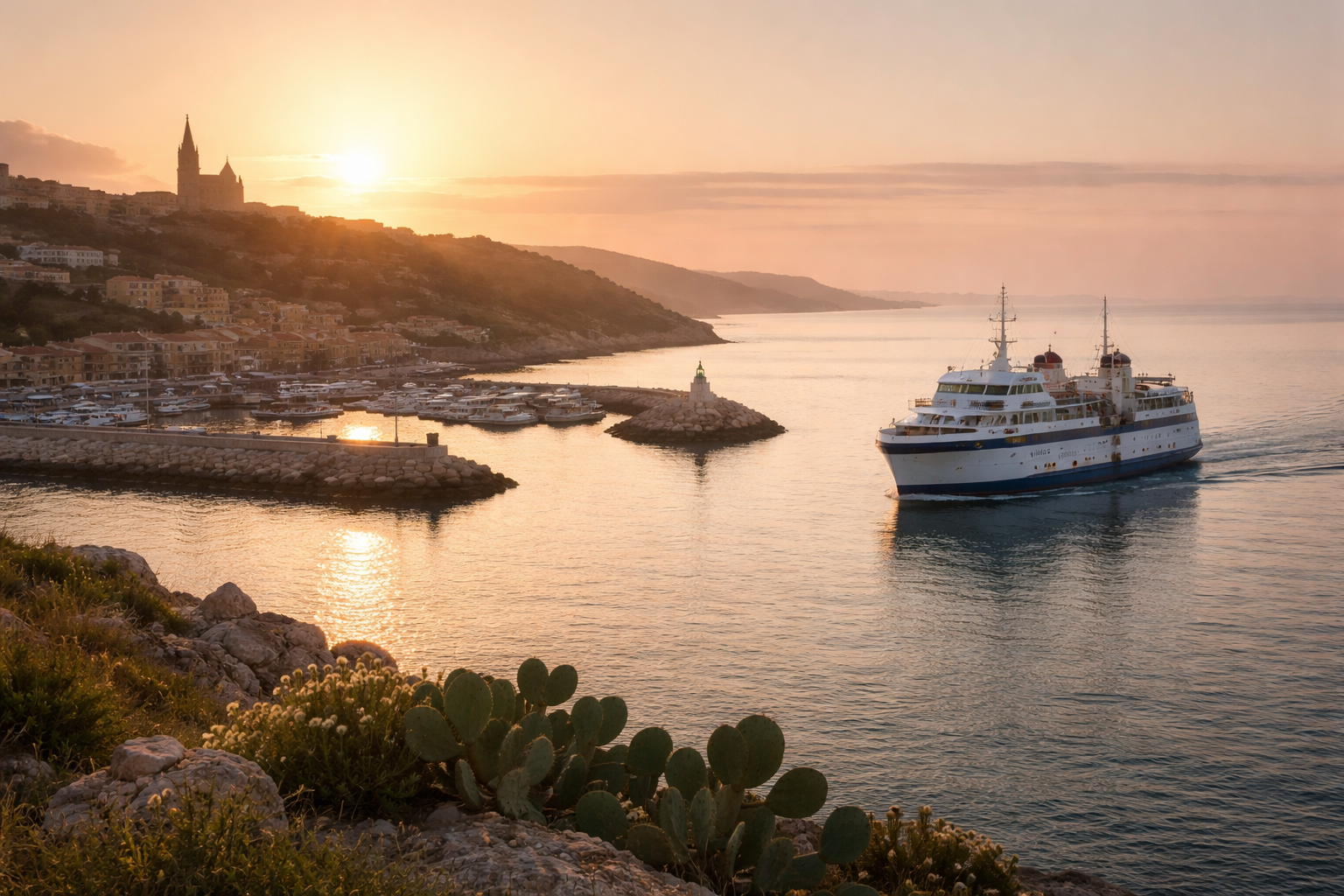
The Malta-Gozo ferry is the main way to travel between Malta and Gozo. The traditional Gozo Channel service connects Ċirkewwa in northern Malta with Mġarr Harbour in Gozo in around 25 minutes, carrying both foot passengers and vehicles throughout the day and night.
Travellers without a car also have several Gozo fast ferry options. Fast passenger services connect Mġarr with Valletta, Sliema and Buġibba, making it possible to reach Gozo without first travelling to the Ċirkewwa ferry terminal.
Which ferry to Gozo is best depends largely on where you are staying in Malta, whether you are travelling with a vehicle and how much flexibility you need. This guide compares the main Malta to Gozo ferry routes, current prices, fast ferry connections, crossing times, timetables and practical travel information for 2026.
Malta – Gozo Ferry at a Glance
| Route | Approx. crossing | Standard adult fare | Vehicles | Best for |
|---|---|---|---|---|
| Ċirkewwa – Mġarr | ~25 min | €4.65 | Yes | Most travellers, cars and maximum flexibility |
| Valletta – Mġarr | ~45 min | €7.50 | No | Foot passengers staying in or near Valletta |
| Sliema – Buġibba – Mġarr | Check current timetable | €8.50 from Sliema | No | Sliema, Gżira and nearby areas |
| Buġibba – Mġarr | Check current timetable | €6.50 | No | Buġibba, Qawra and St Paul’s Bay |
Quick answer: For most visitors, the Ċirkewwa to Gozo ferry is the easiest and most flexible option. It operates 24 hours a day, carries vehicles as well as foot passengers and takes approximately 25 minutes. If you are staying around Valletta, Sliema or Buġibba and travelling without a car, a fast ferry to Gozo may be more convenient.
Malta Gozo ferry Fares and schedules can change. Check the current Gozo Channel timetable or Gozo Highspeed schedule shortly before travelling.
Ċirkewwa to Gozo Ferry
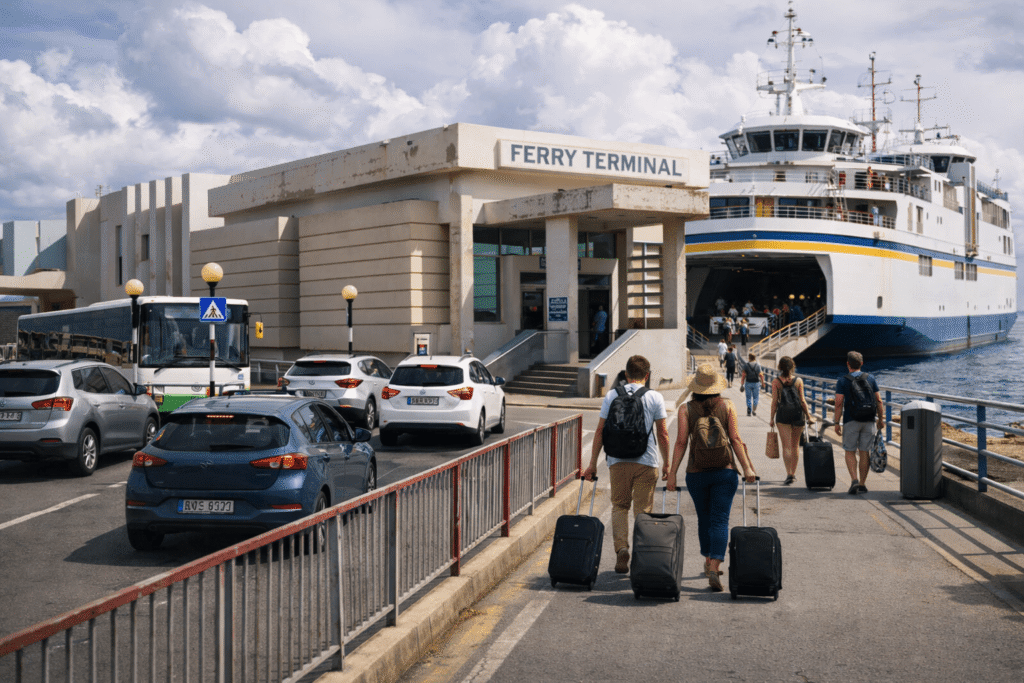
The Ċirkewwa–Mġarr ferry is the main Malta to Gozo connection and the only ferry covered in this guide that carries both passengers and vehicles. The crossing takes approximately 25 minutes, and the Gozo Channel service operates 24 hours a day throughout the year, subject to weather and operational conditions.
You do not need to reserve a specific sailing on the standard Gozo Channel ferry. Boarding operates on a first-come, first-served basis, making this the most flexible option for travellers who do not want to plan around a particular departure.
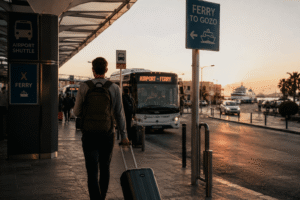
Ċirkewwa is located at the northern end of Malta. If you are travelling from Valletta, Sliema or Malta International Airport, remember to include the road journey across Malta when comparing the total travel time with one of the fast ferry services.
Gozo Channel Ferry Schedule
There is no single departure interval that accurately describes the entire Gozo ferry schedule. Services run throughout the day and night, but frequency varies according to the time and day.
The published Gozo Channel timetable currently covers services through 8 November 2026. Because schedules are updated periodically, it is better to check the official Gozo Channel timetable than rely on departure times copied into a travel guide.
Gozo Fast Ferry 2026: Valletta, Sliema & Buġibba
The Gozo fast ferry provides an alternative for foot passengers who want to reach Gozo without travelling to Ċirkewwa.
Fast ferry services operate from Valletta, Sliema and Buġibba, with all routes arriving at Mġarr Harbour in Gozo. They do not carry cars, and departures follow fixed timetables rather than the more continuous pattern of the Gozo Channel service.
For travellers staying close to one of the departure points, the fast ferry can reduce the amount of time spent travelling across Malta by road. However, fast passenger ferries are generally more sensitive to rough sea conditions, so checking the latest service information is particularly important when the weather is unsettled.
Valletta to Gozo Fast Ferry
The Valletta to Gozo fast ferry connects Malta’s capital directly with Mġarr Harbour. The crossing takes approximately 45 minutes and is available to foot passengers.
The standard adult one-way fare is currently €7.50.
This route can be particularly convenient if you are staying in Valletta or surrounding areas. Although the sea crossing itself is longer than the Ċirkewwa–Mġarr journey, it can reduce the total travel time because you avoid the road journey from central Malta to the northern ferry terminal.
Unlike the standard Gozo Channel ferry, the Valletta service operates according to a fixed Gozo Fast Ferry Schedule. Check the latest Gozo Fast ferry departures directly with Gozo Highspeed before travelling.
Sliema to Gozo Fast Ferry
A new passenger ferry service connecting Sliema, Buġibba and Mġarr in Gozo began operating in May 2026.
For travellers staying in Sliema, Gżira, St Julian’s or nearby areas, this provides another way to travel directly towards Gozo without first crossing Malta by road to Ċirkewwa.
Services leaving Sliema call at Buġibba before continuing to Mġarr, an important detail when comparing journey times with the other ferry options.
The current standard adult fare from Sliema to Gozo is €8.50. The service is for foot passengers and operates according to a scheduled timetable.
Buġibba to Gozo Fast Ferry
The same coastal Gozo fast ferry service connects Buġibba with Mġarr Harbour, making it particularly useful for travellers staying around St Paul’s Bay, Buġibba and Qawra.
The current standard adult fare from Buġibba to Gozo is €6.50.
For some visitors in northern Malta, Ċirkewwa will still be the more flexible option. However, the Buġibba fast ferry can be convenient for foot passengers when its scheduled departure fits their plans.
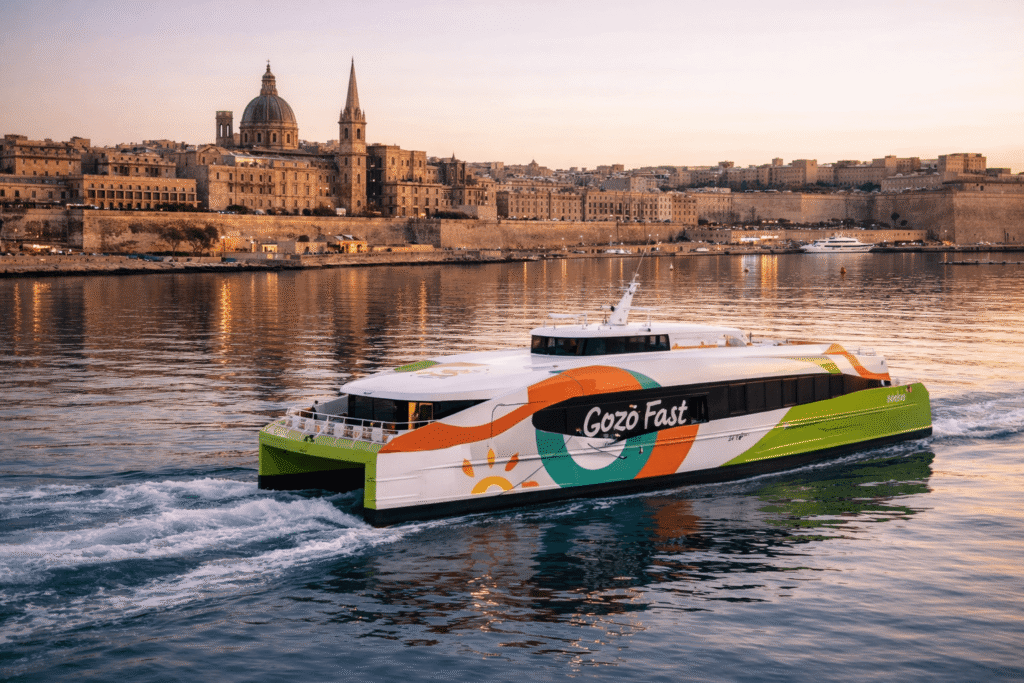
Gozo Fast Ferry Prices
Current standard adult fares for the main Gozo Malta fast ferry connections are:
| Fast ferry route | Standard adult fare |
|---|---|
| Valletta – Gozo | €7.50 |
| Sliema – Gozo | €8.50 |
| Buġibba – Gozo | €6.50 |
Reduced fares are available for some Gozo residents, students, seniors, children and other eligible passengers. Fare categories vary by route, so check the latest Gozo Highspeed fares before purchasing your ticket.
If you are comparing the Gozo fast ferry price with the standard ferry, remember to consider the cost and time required to reach Ċirkewwa as well. A more expensive ferry ticket can still be the more convenient option if you are already staying close to Valletta, Sliema or Buġibba.
Gozo Ferry Prices 2026
The standard Gozo ferry price depends on the passenger category and whether you are travelling with a vehicle.
Gozo Channel Passenger Fares
| Passenger | Fare |
|---|---|
| Standard passenger | €4.65 |
| Gozo resident subsidised fare | €1.15 |
| Child aged 3–12 | €1.15 |
| Infant aged 0–2 | Free |
| Eligible senior resident aged 60+ | Free |
| Standard night passenger fare | €4.05 |
The €4.05 night fare is a standard passenger night tariff rather than the Gozo resident fare. It applies to eligible departures from Mġarr after 20:00 and before the first morning trip during the November-to-March period.
Children aged 0–2 travel free, although a free infant ticket must still be obtained and validated. Eligible senior residents and passengers presenting a valid EU Disability Card can also travel free, subject to the operator’s current conditions.
For current fare categories and eligibility requirements, check the official Gozo Channel passenger fares.
Taking a Car on the Gozo Ferry
Yes, you can take a car to Gozo, but you need to use the Gozo Channel ferry between Ċirkewwa and Mġarr. The fast ferries from Valletta, Sliema and Buġibba are passenger services and do not provide the equivalent car-ferry connection.
At Ċirkewwa, drivers join the vehicle queue and follow staff instructions for boarding. Advance reservations for a particular sailing are not normally required; vehicles embark on a first-come, first-served basis.
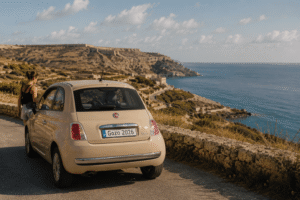
Taking a car can be particularly useful if you plan to explore remote beaches, small villages and rural areas away from the main bus routes. If you are deciding whether you need your own transport after arriving, our car rental in Gozo guide explains the main options.
Because vehicle fares can change, check the official Gozo Channel fares before travelling.
Do You Need to Book the Gozo Ferry?
You do not need to book a specific departure on the standard Gozo Channel ferry from Ċirkewwa. Embarkation is on a first-come, first-served basis.
Standard non-subsidised tickets can also be purchased online. One unusual feature of the system is that ticket validation takes place in Mġarr, Gozo, including for foot passengers who originally started their round trip in Ċirkewwa.
The Gozo fast ferry works differently because services follow fixed departure times. Checking the timetable and ticket availability in advance is sensible, particularly during busy periods.
Standard Gozo Ferry vs Fast Ferry: Which Is Better?
There is no single best ferry for every journey.
The standard Gozo Channel ferry is generally the most flexible option because it operates around the clock, carries vehicles and does not require you to plan around a particular sailing.
The Gozo fast ferry can be more convenient if you are travelling without a car and staying close to Valletta, Sliema or Buġibba.
Choose the Ċirkewwa ferry if you:
- are travelling with a car or motorcycle;
- want maximum flexibility;
- are staying in northern Malta;
- need to travel very early or late;
- do not want to depend on a specific fast-ferry departure.
Consider the Valletta fast ferry if you:
- are travelling as a foot passenger;
- are staying in or around Valletta;
- want to avoid the road journey to Ċirkewwa;
- have a scheduled departure that fits your plans.
Consider Sliema or Buġibba if you:
- are travelling without a vehicle;
- are staying close to one of the coastal departure points;
- want to reduce the road journey across Malta;
- find the scheduled service more convenient than travelling to Ċirkewwa.
If you are travelling directly after landing, our Malta Airport to Gozo guide compares airport transfers, buses, taxis and the different ferry options.
Is the Gozo Ferry Affected by Weather?
Yes, although the standard ferry and fast ferries are affected differently.
The larger Gozo Channel vessels generally operate in a wider range of sea conditions, although all sailings remain subject to weather and operational circumstances. Fast passenger ferries are more sensitive to rough seas and strong winds, making delays or cancellations more likely when conditions deteriorate.
If you need to catch a flight or another important connection after leaving Gozo, allow extra time and check the latest operator information before travelling.
Arriving at Mġarr Harbour in Gozo
Both the standard ferry and the fast ferry services arrive at Mġarr Harbour, Gozo’s main passenger port on the south-eastern coast.
From Mġarr, buses and roads connect the harbour with Victoria and destinations across the island. Victoria is Gozo’s main public-transport hub, making it particularly useful for travellers exploring without a car.
If this is your first visit, you can continue towards Victoria and the Citadel, head towards one of the island’s beaches or use our Gozo itinerary to plan a longer stay.
Travelling without your own vehicle? Our guide to where to stay in Gozo compares the most convenient areas for car-free trips as well as beaches, couples and longer stays.
Planning Your Malta to Gozo Journey
When choosing a ferry from Malta to Gozo, start with your location rather than simply choosing the shortest sea crossing.
For travellers already in northern Malta or travelling with a vehicle, Ċirkewwa is usually the logical choice. If you are staying around Valletta, Sliema or Buġibba, a fast ferry may reduce the amount of road travel required before reaching the boat.
Gozo can be visited on a day trip, but staying for two or three days gives you considerably more time for its beaches, villages, historic sites and coastal landscapes.
Continue planning with our guides to the best things to do in Gozo, the best time to visit Gozo and where to stay in Gozo.
Frequently Asked Questions About the Gozo Ferry
How long is the ferry from Malta to Gozo?
The standard Malta to Gozo ferry from Ċirkewwa takes approximately 25 minutes to reach Mġarr Harbour. The Valletta fast ferry takes around 45 minutes. Total journey time depends on where you start in Malta, so a fast ferry can still be more convenient if it avoids a long road journey to Ċirkewwa.
How much is the Gozo ferry?
The standard Gozo ferry price for an adult foot passenger between Ċirkewwa and Mġarr is €4.65. The subsidised Gozo resident passenger fare is €1.15. Standard adult fast ferry fares currently start at €7.50 from Valletta, €8.50 from Sliema and €6.50 from Buġibba. Check operator fares before travelling.
How often does the ferry to Gozo run?
The Gozo Channel ferry between Ċirkewwa and Mġarr operates 24 hours a day, with frequency varying according to the time and day. Services continue overnight, but departure intervals are not identical throughout the day. Check the official Gozo Channel timetable for the exact departures that apply when you travel.
Do you need to book the ferry from Malta to Gozo?
No. You do not need to reserve a specific departure on the standard Gozo Channel ferry from Ċirkewwa. Boarding is on a first-come, first-served basis. Fast ferries operate according to fixed schedules, so checking departure times and ticket availability in advance is recommended, particularly during busy travel periods.
What is the Gozo fast ferry?
The Gozo fast ferry is a passenger-only alternative to the traditional car ferry from Ċirkewwa. Fast ferry services connect Mġarr Harbour in Gozo with Valletta, Sliema and Buġibba. They can be particularly convenient for travellers staying near these departure points who do not need to take a vehicle to Gozo.
How much is the Gozo fast ferry?
Current standard adult Gozo fast ferry prices are €7.50 from Valletta, €8.50 from Sliema and €6.50 from Buġibba. Reduced fares are available for certain passenger categories. Because prices and fare conditions can change, check Gozo Highspeed’s current fare information before booking your journey.
Is there a fast ferry from Valletta to Gozo?
Yes. The Valletta to Gozo fast ferry carries foot passengers between Valletta and Mġarr Harbour, with the crossing taking approximately 45 minutes. It can be more convenient than Ċirkewwa for visitors staying around Malta’s capital because it avoids the road journey to the northern ferry terminal.
Is there a ferry from Sliema to Gozo?
Yes. A passenger ferry service connecting Sliema, Buġibba and Mġarr, Gozo began operating in May 2026. Services from Sliema call at Buġibba before continuing to Gozo. The standard adult fare from Sliema is currently €8.50, but passengers should check the latest timetable and fare information before travelling.
Is there a ferry from Buġibba to Gozo?
Yes. Buġibba is connected with Mġarr as part of the coastal fast ferry service introduced in 2026. The standard adult fare is currently €6.50. The route is particularly convenient for foot passengers staying around Buġibba, Qawra and St Paul’s Bay who want an alternative to travelling to Ċirkewwa.
Can you take a car on the Gozo ferry?
Yes. Cars and motorcycles can travel on the Gozo Channel ferry between Ċirkewwa and Mġarr. The fast ferry services from Valletta, Sliema and Buġibba are for foot passengers. Taking a car can be useful if you want to explore remote beaches, villages and rural areas of Gozo independently.
Does the Gozo ferry run at night?
Yes. The Gozo Channel service between Ċirkewwa and Mġarr operates 24 hours a day, although departures are less frequent at some times overnight. A special standard passenger night fare applies to eligible departures from Mġarr during the November-to-March period. Check the current timetable for exact overnight sailings.
Where does the Gozo ferry arrive?
The standard Malta–Gozo ferry and fast ferry services arrive at Mġarr Harbour on Gozo’s south-eastern coast. From Mġarr, buses and roads connect with Victoria and destinations across the island. Victoria serves as Gozo’s main public-transport hub for onward journeys to villages, beaches and attractions.