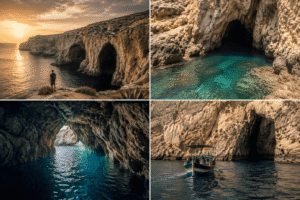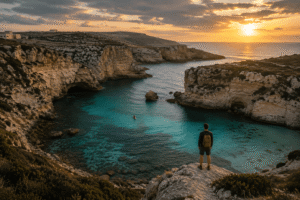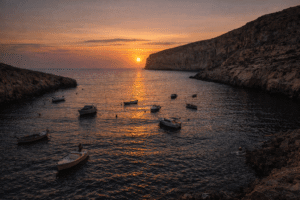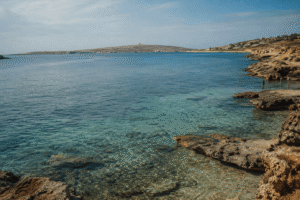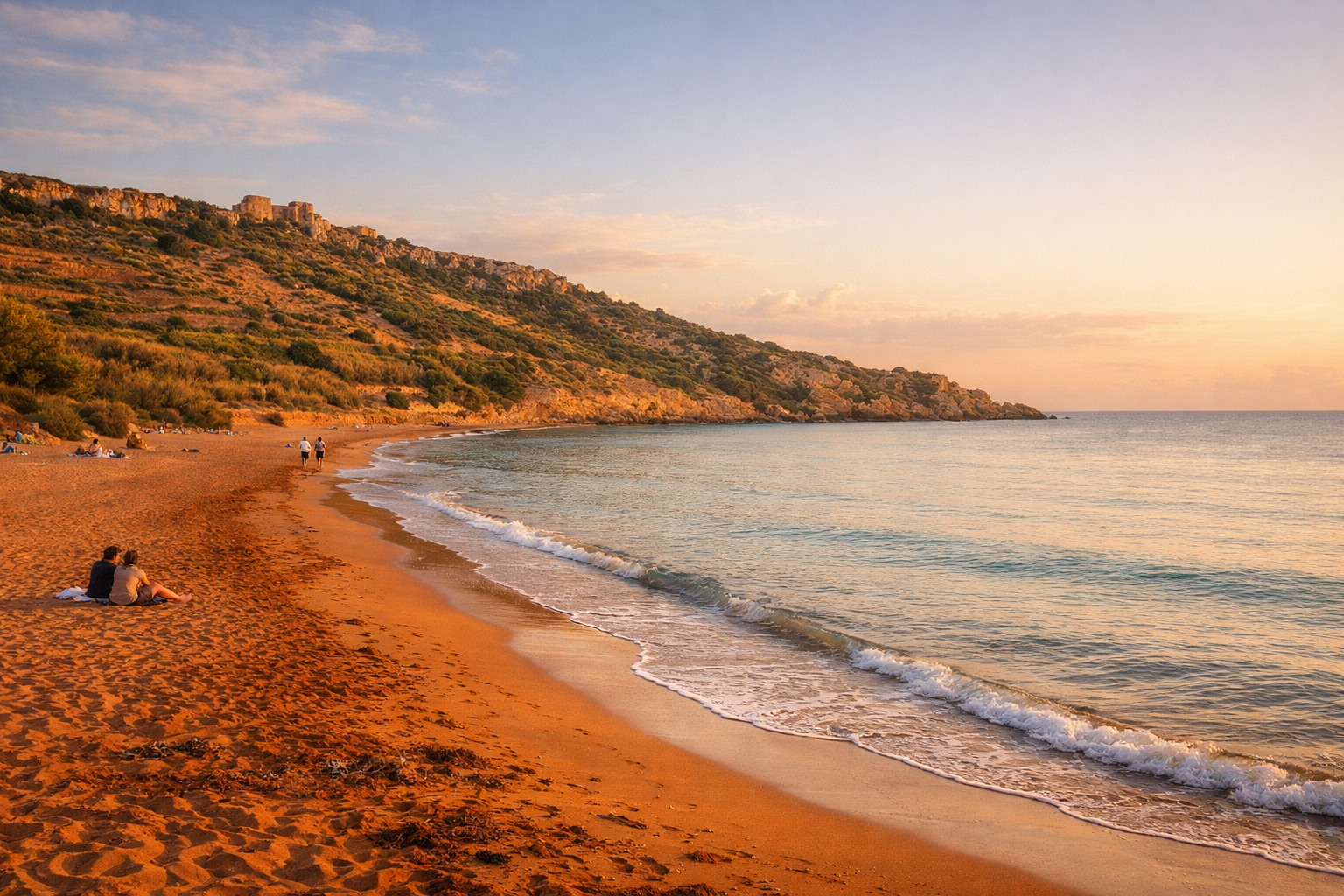
Gozo’s coastline is not defined by long, continuous sandy beaches. Instead, it shifts between open bays, shelves, and narrow inlets that appear almost unexpectedly between cliffs.
The best beaches in Gozo are not only places to swim, but places where landscape, light, and water meet in different ways across the day.
Within short distances, the character of the coast changes — from wide sand to quiet rocky edges – often within a single drive.
Types of Beaches in Gozo
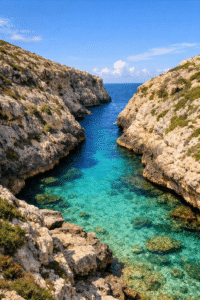
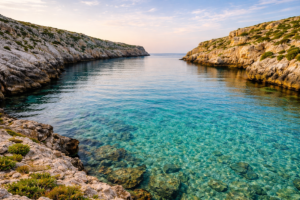
Gozo Beaches tend to fall into a few natural patterns.
There are sandy bays, though only a small number. There are flat limestone edges where people enter the water directly. And there are narrow inlets, shaped by erosion, where the sea reaches inland.
Each creates a different relationship with the water.
TL;DR
- Sandy beaches are limited, but distinct – Ramla Bay and San Blas are the standouts
- Most swimming spots are rocky, with exceptionally clear water
- Early morning and evening are the best times to visit in summer
- Xlendi and Hondoq are the best options for families
- Wied il-Għasri is the top snorkelling spot on the island
- The coastline changes character completely within a few minutes’ drive
Gozo Beaches at a Glance
Not sure which beach to visit? These two tables cover the key differences.
Swimming & access:
| Gozo Beach | Type | Snorkelling | Best for |
| Ramla Bay | Sand | ★★★★☆ | Space & sand |
| San Blas Bay | Sand | ★★★★★ | Snorkelling |
| Xlendi Bay | Rock/Sand | ★★★★☆ | Families |
| Hondoq ir-Rummien | Sand/Rock | ★★★★☆ | Clear water |
| Marsalforn | Rock/Pebble | ★★★☆☆ | Convenience |
| Wied il-Għasri | Pebble | ★★★★★ | Snorkelling |
| Qbajjar / Xwejni | Rock/Pebble | ★★★☆☆ | Local swimming |
Practical info:
| Gozo Beach | Crowds | Parking | Facilities |
| Ramla Bay | High Jul–Aug | Free (fills early) | Kiosk, showers |
| San Blas Bay | Low | Walk from Nadur | None |
| Xlendi Bay | Med (eves) | Limited | Restaurants nearby |
| Hondoq ir-Rummien | Low–Med | Yes, nearby | Minimal |
| Marsalforn | Med | Yes | Restaurants, pedalos |
| Wied il-Għasri | Very Low | Top of valley only | None |
| Qbajjar / Xwejni | Low | Yes | Salt pans nearby |
Ramla Bay (Ramla l-Ħamra) in Gozo
The sand carries a deep red-gold tone, which becomes softer and warmer toward evening. The surrounding landscape remains largely undeveloped, giving the bay a wide, quiet feeling. In the early morning, the space feels almost empty. By midday, especially in summer, it becomes more active – though rarely crowded in a compressed way.
How to Get There
A road leads down toward the bay, with a free car park above. In July and August it fills completely by around 11am – arriving before 9am makes a noticeable difference to both space and atmosphere. Buses connect from Victoria (Rabat) via route 322, with roughly 90-minute frequency in summer.
Best For
- Families with young children — gradual sandy entry, shallow for 20–30 metres
- Long, unhurried visits with time to watch the light change
- Swimming rather than snorkelling — the centre of the bay is sandy-bottomed
Practical Tips
There is little natural shade. The bay is open to northerly winds, which can change the surface of the water. The best snorkelling at Ramla is along the rocky edges at either end, not in the centre. From late September into October, posidonia seagrass washes onto the beach – a natural and protected process, not a sign of pollution, but it changes the feel of the bay significantly.
A small kiosk sells drinks and snacks in summer, with basic toilet facilities near the car park.nd snacks in summer, with basic toilet facilities near the car park.
San Blas Bay in Gozo
The San Blas Bay sand has a similar reddish tone to Ramla, though the setting feels more contained. The surrounding slopes draw the space inward, creating a quieter atmosphere. Even in summer, it tends to remain less active than larger beaches.
How to Get There
San Blas is accessed via Nadur. From the village square, follow signs toward San Blas Valley. The road narrows significantly on the descent – if driving a small car, park near the bus stop at Weraq and walk the final 10–15 minutes down. The path is steep but clear. An increasingly popular option is to hire a quad bike in Nadur, which handles the track more comfortably. There is nothing at the beach – no water, no kiosk, no toilets. Bring everything you need, including shade.
Best For
- The best snorkelling of any sandy beach in Gozo – crystal clear water along the rocky sides
- Gozo Visitors wanting quiet even in peak summer
- A more natural, less developed setting than Ramla
Practical Tips
The return walk can feel steep in heat. Arriving before 10am avoids both the heat on the ascent and the busiest period. The water is notably clearer than Ramla – visibility of several metres is common on calm days.and arriving earlier in the day makes the experience more comfortable.
Xlendi Bay in Gozo
Xlendi is a sheltered bay on Gozo’s southwest coast, enclosed on both sides by limestone cliffs that drop almost directly into the water. The bay is relatively small — more of an inlet than an open beach – but the combination of clear water, surrounding village life, and accessible swimming makes it one of the most visited spots on the island.
The Xlendi seafront is lined with restaurants and cafes, which means evenings here are livelier than at Ramla or San Blas. In the late afternoon, the light hits the water in a way that is difficult to photograph well but easy to sit and watch.
How to Get There
Xlendi village is a short drive from Victoria – roughly 10 minutes by car. The road descends steeply into the bay. Parking is limited and fills quickly in summer; arriving before 10am is advisable in July and August. Alternatively, park in the upper village and walk the 5–10 minutes down to the waterfront.
Best For
- Families – shallow, sheltered entry and restaurants close at hand
- Combining swimming with lunch or dinner at the bay-front restaurants
- Snorkelling around the rocks at the edges, where the seabed drops sharply
- An evening swim followed by a walk along the waterfront
Practical Tips
The Xlendi bay faces southwest and stays in sun for most of the afternoon. The water tends to be a few degrees warmer than north-facing beaches. On busy summer evenings it can feel crowded – mornings are quieter and the light is different but equally good.
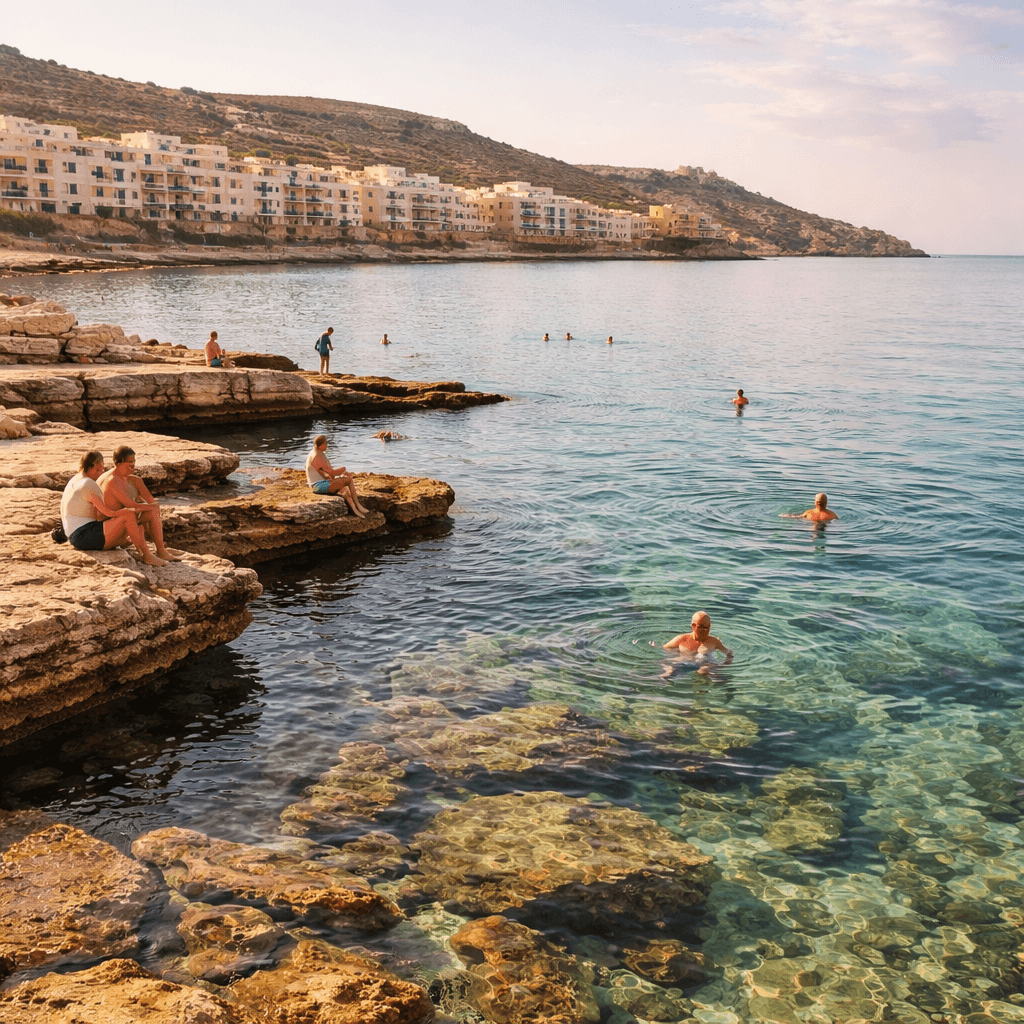
Hondoq ir-Rummien in Gozo
The shoreline of Hondoq shifts between small sandy sections, pebbles, and flat rock. A few metres into the water, visibility remains high. In the morning, the surface can appear almost still.
By midday, especially in summer, the rhythm becomes more active. On clear days, the view across the channel to Comino is striking – the outline of the Blue Lagoon’s cliffs is visible from the water. The bay also has small caves at water level that are popular with beginner divers and snorkellers.
How to Get There
Hondoq is near the village of Qala on Gozo’s southeast tip – about 15 minutes from Victoria by car. It is not accessible by bus, so a car or taxi is the only realistic option. Parking is close to the water.
Best For
- Clear-water swimming – consistently among the clearest on the island
- Light snorkelling and beginner diving – small caves at water level
- Open views across the channel toward Comino and the Blue Lagoon
- Kayaking – rental is sometimes available on site in summer
Practical Tips
Shade is limited. Wind direction influences conditions more here than in enclosed bays – this bay in Gozo, Malta is more exposed on windy days.
Marsalforn Beach & Bay in Gozo
Marsalforn is Gozo’s main resort town and the most accessible stretch of waterfront on the island. The bay is not one beach but a series of flat rocky ledges, small pebbly inlets, and promenaded waterfront spread along the north coast.
It is not the most visually dramatic of Gozo’s swimming spots. But it is the most convenient, and on the right morning – before the town fully wakes – the water in the bay can be genuinely quiet and clear.
How to Get There
Marsalforn is about 10 minutes from Victoria by car and well served by bus. Parking is generally available along the seafront, though limited in peak summer evenings.
Best For
- Families who want facilities close to the water – restaurants, cafes, and a pharmacy within short walking distance
- Visitors staying in Marsalforn who want easy access without driving
- Pedalo hire and relaxed seafront time rather than committed swimming
- Combining with the Xwejni salt pans – a 10-minute walk along the coast
Practical Tips
The water at Marsalforn is clear but entry points are mostly flat rock – water shoes are always useful. This Gozo bay is exposed to the Gregale (northerly wind) in autumn and winter, which can make conditions rough. In summer it is generally calm. Marsalforn will not be the highlight of a beach day in Gozo – but if you are based in the town, or have young children who need facilities close at hand, it works well.
Wied il-Għasri in Gozo
Wied il-Għasri is less a beach than a narrow valley where the sea reaches inland. Steep limestone walls form a passage that leads toward deeper water. The setting feels more enclosed and changes quickly depending on light and sea conditions. At certain times of day, the space is almost silent.
How to Get There
Access is from the village of Ghasri – follow the road to the end, where a car park sits at the top of the valley. A staircase carved into the rock descends roughly 100 steps to the water. It is manageable but steep, and not suitable for those with limited mobility.
Best For
- Experienced snorkellers – the channel walls are covered in marine life and visibility is exceptional
- Quieter moments away from open bays
- Observing the landscape as much as swimming
Practical Tips
This is not a beach for young children or uncertain swimmers. The water deepens quickly, the channel narrows, and there are no facilities and no lifeguard. The sea can move through the passage with more force on windy days. Conditions are best when calm.
Qbajjar Bay & Xwejni Bay in Gozo
Two shallow bays a short walk from Marsalforn, separated by a narrow headland. The shoreline is flat rock and pebble, which makes entry easy enough with water shoes. The water is clear and generally calm. These bays are sheltered from the main swell.
The main reason to visit is the Xwejni salt pans directly alongside – a series of ancient rock-cut channels that fill and evaporate with the tide, still harvested by local families. The combination of the salt pans, the flat coast, and the open horizon makes it worth an hour even without swimming. A couple of small bars sit on the seafront, and the area is popular with local swimmers rather than tourists, which keeps the atmosphere relaxed.
Which Gozo Beach Should You Choose?
The choice in Gozo is rarely about distance – most beaches are within 20 minutes of each other. It comes down to what you are looking for.
| You want… | Go to… |
| Space and sand | Ramla Bay — widest beach on the island, best early morning |
| Quiet even in peak summer | San Blas Bay — accessible only on foot, rarely crowded |
| The best snorkelling | Wied il-Għasri or San Blas — exceptional underwater clarity at both |
| Family-friendly with facilities | Xlendi or Hondoq ir-Rummien — shallow entry, restaurants or kiosk nearby |
| A view and clear water | Hondoq ir-Rummien — open views to Comino, consistently clear |
| Convenience and town access | Marsalforn — the least scenic but the most practical |
| Something different at sunset | Xlendi or Xwejni — southwest light in late afternoon is worth the drive |
Often, the decision comes down to light, wind, and how much movement you’re looking for.
When to Visit Gozo Beaches
The sea and weather in Gozo follow a clear seasonal pattern. Understanding it helps you choose not just when to visit, but which beach will be at its best.
Temperatures & crowds:
| Season | Sea Temp. | Air Temp. | Crowds |
| April–May | 17–20°C | 18–24°C | Low |
| June | 21–23°C | 26–29°C | Low–Medium |
| July–August | 25–27°C | 30–33°C | High |
| September | 25–26°C | 27–30°C | Medium |
| October | 22–24°C | 22–26°C | Low |
| Nov–March | 15–18°C | 12–18°C | Very Low |
What to expect from Gozo Beaches:
| Season | Notes |
| April–May | Ideal for quiet visits. Water still fresh but swimmable. Best months for Wied il-Għasri. |
| June | Sweet spot — warm enough for long swims, not yet peak season. Go to any beach. |
| July–August | Peak season. Arrive before 9am. Ramla Bay fills fast; San Blas stays noticeably quieter. |
| September | Best overall month. Warm sea, softer light, fewer tourists. Seagrass begins at Ramla. |
| October | Still warm enough to swim. Gregale wind starts — north-facing beaches can be rough. |
| Nov–March | Quiet. On still days, swimming is possible. Hondoq and Xlendi are the calmest options. |
Our recommendation: May to June and September are the best months. The water is warm, the light is good, and the island is recognisably itself rather than a version of a summer resort.
Practical Tips for Gozo Beaches
- Wind direction shapes the experience more than distance – north-facing beaches (Ramla, Marsalforn) are most exposed to the Gregale in autumn and winter
- Water shoes are useful at most rocky entry points – particularly Marsalforn, Wied il-Għasri, and Xwejni
- Midday sun from May to September is intense – UV levels in Malta are high; factor 50 is not excessive
- Early morning and late afternoon are the most balanced times for light, temperature, and space
- Jellyfish: in late summer (August–September), jellyfish occasionally appear. The purple jellyfish stings; the fried egg jellyfish (more common) does not. Check conditions locally before swimming
- Natural shade is very limited at most beaches – Ramla and Hondoq have almost none. Bringing a beach umbrella makes a significant difference in July and August
- The nearest supermarket to most beaches is in the nearest village – Nadur for San Blas, Qala for Hondoq, Victoria for most others. None of the main beaches have on-site food shops beyond seasonal kiosks
- For deeper water experiences, see our guide to diving in Gozo
Why Gozo Beaches Feel Different
Gozo’s coastline has largely remained outside large-scale development.
Swimming areas are often part of everyday village life rather than separate zones. This creates a quieter, more continuous connection between land and sea.
Frequently Asked Questions
What is the best beach in Gozo for snorkelling?
Wied il-Għasri and San Blas Bay offer the best snorkelling in Gozo. Wied il-Għasri has the most dramatic underwater landscape — narrow channel walls covered in marine life — but is not suitable for children or weak swimmers. San Blas offers exceptional clarity in a more accessible setting. Hondoq ir-Rummien is the best option for beginner snorkellers, with small caves at water level.
Are there sandy beaches in Gozo?
Yes, but they are limited. Ramla Bay (Ramla l-Ħamra) is the largest and most accessible sandy beach, with distinctive red-gold sand. San Blas Bay is smaller, more enclosed, and quieter. Most of Gozo’s other swimming spots are rocky — flat limestone shelves and pebbled inlets rather than sand.
Is there parking at Ramla Bay?
Yes — there is a free car park above the beach. In July and August it fills completely by around 11am. Arriving before 9am avoids both the parking problem and the busiest part of the day. Buses connect from Victoria (Rabat) via route 322, with roughly 90-minute frequency in summer. Taxis can bring you directly from the Gozo ferry port.
Are Gozo beaches crowded in summer?
Gozo beaches are significantly less crowded than equivalent beaches on Malta island, but the main beaches do get busy in July and August. Ramla Bay and Xlendi are the most visited. San Blas, Wied il-Għasri, and Hondoq ir-Rummien remain quieter even at peak times. Early morning visits — before 9am — make a noticeable difference at all beaches.
What is the best time to visit Gozo beaches?
May to June and September are the best months. The sea is warm enough for comfortable swimming, the beaches are not at peak capacity, and the light in those months is better for both photography and simply being outdoors. July and August are the warmest but also the busiest. October remains swimmable in calm weather.e.