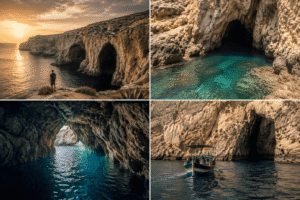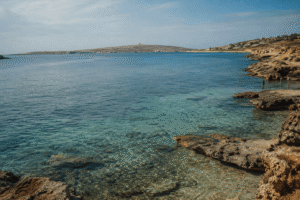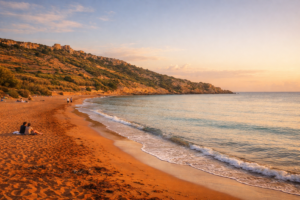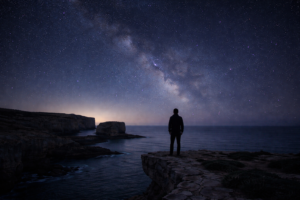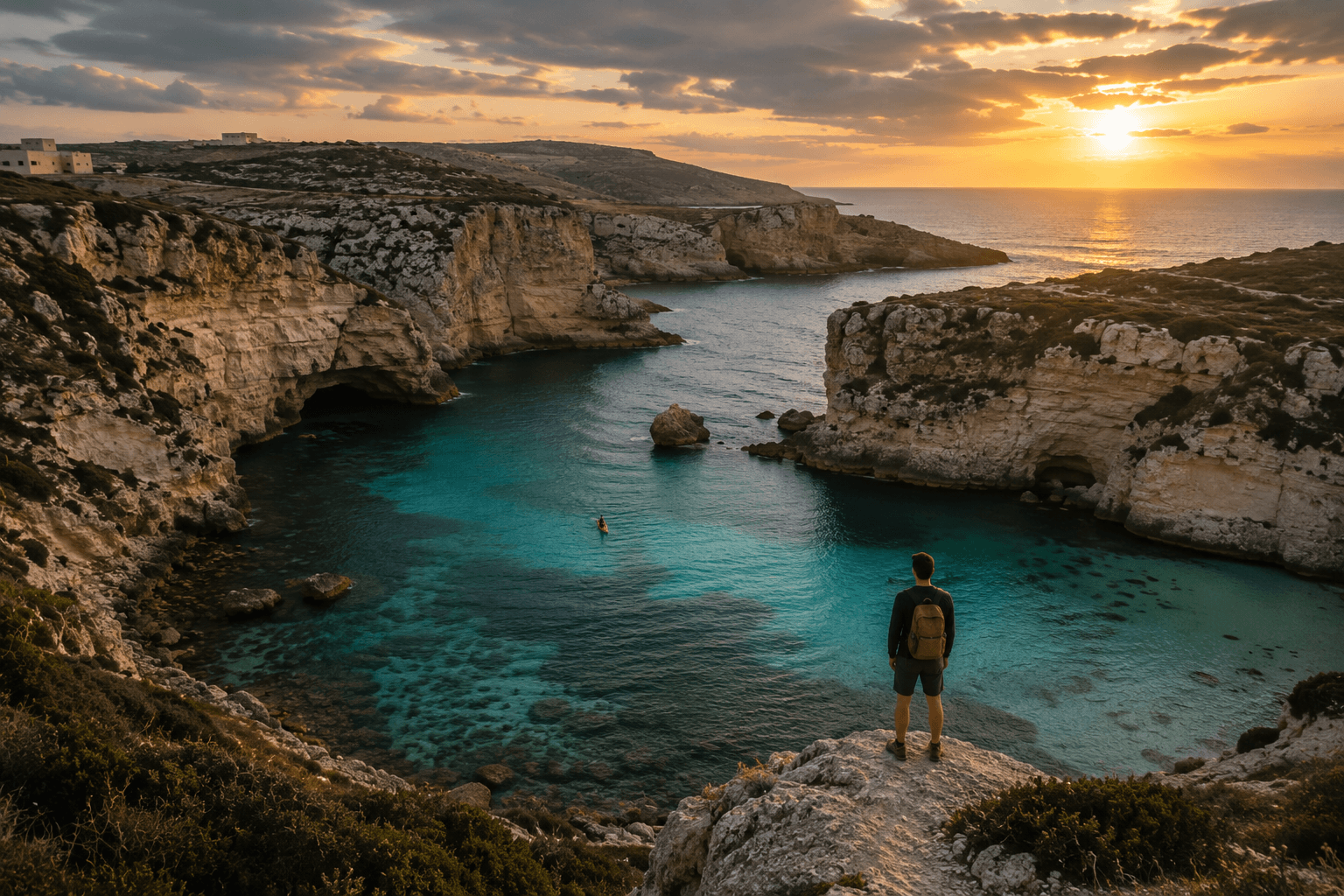
The best hidden gems in Gozo, Malta are not necessarily secret places. They are valleys, small bays, cliff paths and stretches of countryside that many visitors simply pass by. Wied il-Għasri, San Blas Bay, Wied il-Mielaħ and Lunzjata Valley are among the best places to start if you want to see a quieter side of the island.
Gozo is small enough that few places remain genuinely undiscovered. Timing matters just as much as location: arrive early, walk a little further than the obvious viewpoint, or explore outside the busiest summer weeks and the island can feel remarkably different.
Here are 12 quiet and lesser-known places in Gozo worth making time for.
Hidden Places in Gozo at a Glance
| Place | Best for | Best time | Access |
|---|---|---|---|
| Wied il-Għasri | Swimming, gorge scenery | Morning | Steps down to inlet |
| San Blas Bay | Small beach, swimming | Morning | Very steep walk |
| Wied il-Mielaħ | Coastal scenery, walking | Spring/autumn | Road + walking |
| Lunzjata Valley | Countryside, slow walks | Winter/spring | Easy |
| Ta’ Ċenċ & Sanap Cliffs | Clifftop walks, sunsets | Late afternoon | Walking |
| Għarb countryside | Rural Gozo | Spring | Walking |
| Ta’ Ġurdan area | Panoramic countryside | Clear morning | Uphill walk |
| Xwejni coast | Salt pans, coastal walks | Morning/evening | Easy |
| Mġarr ix-Xini Valley | Gorge, swimming | Morning | Road/walking |
| Kerċem countryside | Village walks | Spring/autumn | Easy |
| Munxar & Sanap paths | Rural-to-coast walks | Late afternoon | Walking |
| Xlendi Valley | Valley scenery | Winter/spring | Walking |
1. Wied il-Għasri – Gozo’s Hidden Sea Gorge
Wied il-Għasri is one of the most distinctive Gozo hidden gems: a narrow limestone gorge that winds towards a tiny pebbly inlet on the north coast.
High cliffs close in around a strip of clear Mediterranean water, creating a setting that feels almost cut off from the rest of the island.
A staircase carved into the side of the gorge leads down to the water. The inlet is small, so the experience changes dramatically depending on when you arrive.
Come early on a calm summer morning and it can be a beautiful place for swimming and snorkelling. During rough seas, stay out of the water and appreciate the gorge from a safe position instead.
The valley itself is also worth exploring. Visit Gozo recommends the area for walking and cycling, particularly in winter and spring, when the surrounding countryside is greener and wildflowers appear.
Best for: Swimming, snorkelling, photography and dramatic scenery
Best time: Early morning; winter and spring for walking
Good to know: There are steps down to the inlet and virtually no facilities
Read our complete Wied il-Għasri guide before you go.
2. San Blas Bay – A Quieter Alternative to Ramla
If you want a small beach rather than a dramatic gorge, San Blas Bay is one of Gozo’s best alternatives to busy Ramla Bay.
The beach lies below Nadur and shares the reddish-orange sand associated with its much larger neighbour. What keeps San Blas comparatively quiet is its access.
The final road down is extremely steep and closed to normal traffic, so visitors have to complete the descent on foot. Visit Gozo describes the beach as roughly 100 metres long and confirms that a seasonal jeep service may operate during summer.
That steep walk back up is worth considering before you set off, especially in hot weather.
If you do not want to descend all the way, the upper paths and surrounding countryside are still worth exploring. From here, Gozo feels agricultural rather than coastal: terraced fields, red soil and vegetation dropping towards the sea.
Best for: Swimming, snorkelling and a quieter beach day
Best time: Morning
Good to know: The walk back uphill is demanding, particularly in summer
See our detailed San Blas Bay guide or compare it with the best beaches in Gozo.
3. Wied il-Mielaħ – More Than the Rock Window
The Wied il-Mielaħ Window is no longer completely unknown, but the landscape surrounding it still feels considerably less developed than Gozo’s headline attractions.
The natural limestone arch stands at the end of Wied il-Mielaħ Valley on Gozo’s western coast.
After the Azure Window collapsed in 2017, Wied il-Mielaħ became better known as another of the island’s natural coastal arches. Yet many visitors see the window, take a photograph and leave.
The better experience is to give the surrounding valley and coastline some time.
Visit Gozo highlights the area as particularly attractive for exploration in spring and autumn, when Mediterranean vegetation and wildflowers add colour to the valley.
Best for: Coastal walking, geology and photography
Best time: Spring or autumn
Good to know: Stay well back from exposed cliff edges, particularly in strong winds
For hikers, the official Visit Gozo Ta’ Ġurdan Walk also connects the wider area around Wied il-Mielaħ with Ta’ Ġurdan Hill, Wied il-Għasri and Ta’ Pinu.
4. Lunzjata Valley – A Green Escape Near Victoria
One of the surprising things about Lunzjata Valley is how close it is to Victoria.
Gozo’s capital can feel busy by island standards, yet just beyond it lies a fertile agricultural valley shaped by fields, springs and old water channels.
Visit Gozo describes Lunzjata as an important agricultural area and highlights the running water from its springs and aqueducts. A small chapel dedicated to the Annunciation stands near the entrance to the valley.
This is not a place to visit for one spectacular viewpoint.
It is better for a slow walk.
Come after the wetter months and the contrast with Gozo’s exposed summer landscape can be striking.
Best for: Gentle walks, greenery and rural scenery
Best time: Winter and spring
Good to know: Treat working farmland with respect and stay on established routes
Lunzjata is easy to combine with a visit to Victoria and the Citadel.
5. Ta’ Ċenċ and the Quieter Cliff Paths
Ta’ Ċenċ is not exactly a secret, but its plateau is large enough to leave the obvious stopping points behind.
The area lies outside Sannat on Gozo’s southern side and contains the island’s highest cliffs. The plateau is characterised by Maltese garigue and also contains prehistoric remains, including dolmens.
Walk away from the easiest viewpoints and the landscape quickly opens up.
There are no beach bars or promenades here. Just low vegetation, limestone, open sea and an enormous amount of sky.
The nearby Sanap Cliffs extend the experience towards Munxar and Xlendi and are particularly attractive around late afternoon.
This is one of the places where Gozo feels much larger than it actually is.
Best for: Hiking, open landscapes and sunset
Best time: Late afternoon
Good to know: There are exposed cliff edges and little shade
If you want to explore more of Gozo on foot, see our Gozo hiking guide.
6. The Countryside Beyond Għarb
Għarb itself appears on plenty of Gozo itineraries, partly because of its proximity to Ta’ Pinu and the western side of the island.
Walk beyond the village, however, and the atmosphere changes quickly.
Small roads pass between dry-stone walls and agricultural fields towards the coast. One particularly rewarding direction leads towards Wied il-Mielaħ.
Visit Gozo specifically recommends the countryside around Għarb and St Demetrius’ Chapel for walking, with rural routes eventually leading towards the dramatic natural window at Wied il-Mielaħ.
Spring is particularly attractive when the countryside is greener and wildflowers appear between the fields.
There is no single attraction you need to reach.
That is precisely why it works.
Best for: Rural walks and photography
Best time: Spring or late afternoon
Good to know: Stay on public roads and paths and respect private farmland
7. Ta’ Ġurdan Hill – Gozo from Above
If the Citadel gives you the classic elevated view of Gozo, Ta’ Ġurdan Hill offers a much more rural version.
The hill rises above Għasri and is crowned by Ta’ Ġurdan Lighthouse, inaugurated in 1853.
Visit Gozo notes that the hill reaches around 180 metres above sea level and offers wide panoramic views across the island.
The appeal is not simply the lighthouse.
It is the walk towards it: fields, low hills and open countryside with increasingly wide views as you gain height.
On a clear day, it is one of the best places to appreciate Gozo’s compact geography without being in the centre of a major attraction.
Best for: Views, walking and rural landscapes
Best time: Clear mornings or late afternoon
Good to know: Expect an uphill walk and very little shade
8. Xwejni Salt Pans Beyond the Photo Stop
The salt pans near Xwejni and Qbajjar are among the most photographed places on Gozo, so calling them hidden would be a stretch.
But most visitors experience them as a quick roadside stop.
Walk along the coast instead and the area becomes much more interesting.
Traditional salt pans extend along sections of Gozo’s northern shoreline, particularly between Xwejni and Wied il-Għasri. Some remain in use, with salt traditionally harvested during summer.
The official Visit Gozo Saltpans Walk incorporates Xwejni, Qbajjar and Wied il-Għasri, making this an excellent area for a longer coastal walk rather than a five-minute photograph.
Best for: Coastal walking, photography and local heritage
Best time: Morning or late afternoon
Good to know: Do not walk across or interfere with working salt pans
9. Mġarr ix-Xini Valley – Look Beyond the Bay
Mġarr ix-Xini is known primarily for its small bay, but the valley behind it is just as interesting.
The narrow gorge cuts inland between steep limestone sides, creating a landscape that feels very different from Gozo’s open agricultural plateaus.
The area forms part of Visit Gozo’s official Xlendi walking route, which runs from Mġarr Harbour via Xatt l-Aħmar and Mġarr ix-Xini before continuing towards Ta’ Sannat, the cliffs and Xlendi.
In summer, the bay itself is the obvious attraction.
Outside peak beach season, the valley and surrounding paths become the stronger reason to visit.
Best for: Walking, swimming and limestone scenery
Best time: Morning for swimming; cooler months for walking
Good to know: Access roads in this part of Gozo can be narrow
10. Kerċem’s Back Roads
Kerċem sits so close to Victoria that it is easy to overlook completely.
That is part of its appeal.
Leave the centre behind and small roads lead through agricultural land framed by limestone walls, fig trees and fields. There is no major monument waiting at the end and no particular photograph you are expected to take.
It is simply an easy place to experience the quieter rhythm of inland Gozo.
The countryside between Kerċem, Santa Luċija and the western side of the island is particularly pleasant outside the hottest months.
Best for: Easy rural wandering
Best time: Spring and autumn
Good to know: This is working countryside rather than a designated tourist attraction
If you are in Kerċem during summer, the village also has its own traditional celebration; see our Kerċem festa guide.
11. Munxar and the Paths Towards Sanap
Munxar is one of Gozo’s smaller villages and an excellent starting point for walking towards the southern coast.
The village sits between valleys, with the cliffs of Sanap and Ras il-Bajjada along its southern side and Xlendi below to the west. Visit Gozo describes Munxar as a quiet settlement with rural landscapes and a strong connection to the surrounding coast.
Rather than driving straight through to Xlendi, explore the countryside around the village on foot.
The transition from farmland to open cliff landscape happens surprisingly quickly.
Best for: Countryside-to-coast walks
Best time: Late afternoon
Good to know: Bring water and avoid exposed cliff paths in extreme heat or strong winds
12. Xlendi Valley – The Side of Xlendi Most Visitors Miss
Xlendi Bay is certainly not hidden.
Xlendi Valley is another story.
Behind the restaurants and waterfront, the landscape stretches inland through a valley that becomes greener and more atmospheric after rain.
Visit Gozo describes the route through Xlendi Valley as changing from pastoral scenery into a more rugged landscape of pale limestone and reeds.
It is a useful reminder that some of Gozo’s hidden gems sit remarkably close to its busiest places.
You do not always need to find another village.
Sometimes you only need to walk in the opposite direction.
Best for: Walking and valley scenery
Best time: Winter and spring
Good to know: Conditions can change considerably after heavy rain
Are There Really Secret Places in Gozo?
Not many — and that is worth being clear about.
Gozo covers a small area and places such as Wied il-Għasri, San Blas and Wied il-Mielaħ appear in guidebooks, on maps and across social media.
A better way to think about Gozo’s hidden gems is as places that receive less attention than Ramla Bay, the Citadel, Dwejra and the island’s other headline sights.
What often makes them feel hidden is when and how you visit.
Wied il-Għasri at midday in August can feel completely different from the same gorge on an early June morning. A viewpoint may be busy while a path ten minutes further along is empty.
On Gozo, finding somewhere quiet is often less about discovering a secret and more about slowing down.
Hidden Beaches in Gozo: What to Expect
Visitors often search for secret beaches in Gozo, but genuinely undiscovered sandy beaches are not realistic.
The island’s coastline is too small for that.
What Gozo does have are:
- small pebbly inlets
- rocky swimming spots
- steeply accessed bays
- coastal valleys
- quieter sections of larger beaches
- places that become peaceful outside peak hours
For sand, San Blas is one of the strongest quieter options.
For dramatic scenery, Wied il-Għasri offers a completely different experience.
For more choice, compare them with our guide to the best beaches in Gozo.
Best Hidden Places in Gozo Without a Car
A car makes the remote parts of Gozo easier to reach, but you can still explore quieter places without one.
Lunzjata Valley is particularly convenient because it lies close to Victoria.
Villages such as Għarb, Għasri, Nadur, Sannat and Munxar can also provide starting points for walks, although reaching the final location may require a considerable distance on foot.
If you are relying on buses, plan the return journey before setting off. Services are naturally easier around Victoria and the main villages than at remote coastal locations.
If you prefer having your own transport, our car rental in Gozo guide explains the practical side of driving on the island.
Best Time to Explore Gozo’s Hidden Gems
For walking and countryside, spring is difficult to beat.
After the winter rains, valleys are greener, wildflowers appear and temperatures are generally much more comfortable for longer walks.
Spring
One of the best seasons for Lunzjata, Għarb, Wied il-Mielaħ and rural walking. The island is greener than in summer and daylight hours are increasing.
Summer
Best for swimming, but timing becomes important.
Visit coastal places early in the morning or later in the afternoon and avoid long exposed walks during the hottest part of the day.
Autumn
The sea remains warm after summer while the busiest holiday period begins to ease. Once rain returns, the countryside gradually starts changing again.
Winter
A very different Gozo emerges.
Valleys become greener, waves transform the coast and walking can be excellent between periods of rain. Some rural paths may become muddy or slippery.
See our guides to the best time to visit Gozo and Gozo in winter for more seasonal planning.
How to Explore Hidden Gozo Responsibly
Some of the places on this list feel wild precisely because they have little visitor infrastructure.
That makes responsible behaviour especially important.
- Stay on established public paths where possible.
- Do not cross walls or enter fields simply because there is no visible sign.
- Respect farmers and private property.
- Never walk across working salt pans.
- Take rubbish away with you.
- Avoid exposed cliff edges, particularly in strong winds.
- Do not swim in rough seas simply because a bay looks sheltered.
- Carry enough water for remote walks.
- Download an offline map before heading into rural areas.
- Wear proper footwear rather than relying on beach sandals for countryside routes.
Gozo’s quieter landscapes do not need much from visitors. Mostly, they need to be left as they were found.
A Simple Hidden Gozo Itinerary
If you have a car and want to dedicate one day to the quieter side of the island, you could combine several places without rushing.
Morning: Start at Wied il-Għasri before the day becomes busier.
Continue along the northern coast towards Xwejni and its salt pans.
Late morning: Drive west towards Għarb and explore Wied il-Mielaħ.
Lunch: Stop in Għarb, Victoria or another inland village rather than trying to fit in another attraction.
Afternoon: Head south towards Sannat and walk part of the Ta’ Ċenċ or Sanap cliff area.
Sunset: Finish on the southern or western coast.
The point is not to collect every location on this list.
Three or four places experienced slowly will tell you much more about Gozo than twelve rushed photo stops.
For a more complete trip plan, see our Gozo itinerary.
Which Hidden Gem in Gozo Should You Choose?
If you only have time for one, choose according to what you actually want from the day.
For swimming: Wied il-Għasri
For a quiet sandy beach: San Blas Bay
For coastal scenery: Wied il-Mielaħ
For countryside: Lunzjata Valley
For hiking: Ta’ Ċenċ and Sanap
For panoramic views: Ta’ Ġurdan
For local heritage: Xwejni salt pans
For somewhere close to Victoria: Lunzjata Valley
There is no single “most secret” place in Gozo.
And there does not need to be.
The Gozo You Find Between the Attractions
The quieter side of Gozo rarely announces itself.
There may be no entrance, no sign and no moment when you can say that you have arrived.
Instead, the traffic disappears. Limestone walls replace buildings. You hear the wind, insects, perhaps a church bell from a village you can no longer see.
That is often when the island changes.
The Citadel, Ramla Bay and Dwejra deserve their reputation. But they are only part of Gozo.
Walk a little further, arrive a little earlier and leave enough empty space in your itinerary.
Some of the best places here are found in between.
FAQ About Hidden Places in Gozo
What are the best hidden gems in Gozo?
Some of the best hidden gems in Gozo include Wied il-Għasri, San Blas Bay, Wied il-Mielaħ, Lunzjata Valley, Ta’ Ċenċ, Sanap Cliffs and the countryside around Għarb. They are not completely secret, but generally offer a quieter experience than Gozo’s major attractions.
Are there hidden beaches in Gozo?
Gozo has several small and relatively secluded swimming spots rather than truly secret beaches. San Blas Bay is a quieter sandy option, while Wied il-Għasri has a tiny pebbly inlet reached by steps through a narrow limestone gorge.
What is the quietest part of Gozo?
Gozo’s western countryside around Għarb and Għasri, inland valleys such as Lunzjata and sections of the southern cliff coast can be particularly quiet. The experience varies significantly with season and time of day.
Is Wied il-Għasri worth visiting?
Yes. Wied il-Għasri is one of Gozo’s most unusual natural locations, with a narrow limestone gorge leading to a small pebbly inlet. It is particularly attractive for swimming on calm days and for walking during winter and spring.
Is San Blas Bay difficult to reach?
The final approach to San Blas Bay is very steep and must normally be completed on foot because the lower section of the road is closed to regular traffic. The climb back can be demanding, especially during hot summer weather.
Can you explore hidden places in Gozo without a car?
Yes, although a car makes remote coastal locations easier to reach. Lunzjata Valley is close to Victoria, while buses can take you to villages such as Nadur, Għarb, Sannat and Munxar, from where some locations can be reached on foot.
When is the best time to explore hidden places in Gozo?
Spring and autumn are excellent for walking because temperatures are generally more comfortable. Summer is better for swimming, but early morning and late afternoon are preferable. Winter brings greener valleys and dramatic coastal scenery between periods of rain.
Are Gozo’s hidden places safe to visit?
Most can be visited safely with sensible precautions. Wear suitable footwear, carry water, respect private land and stay away from exposed cliff edges. Swimming should only be attempted when sea conditions are calm, even in apparently sheltered coves.
Explore More of Gozo
Looking for more than the obvious sights? Start with the best things to do in Gozo, compare the island’s best beaches, explore our Gozo hiking guide or build your trip with our complete Gozo itinerary.